
What I Became While Missing You
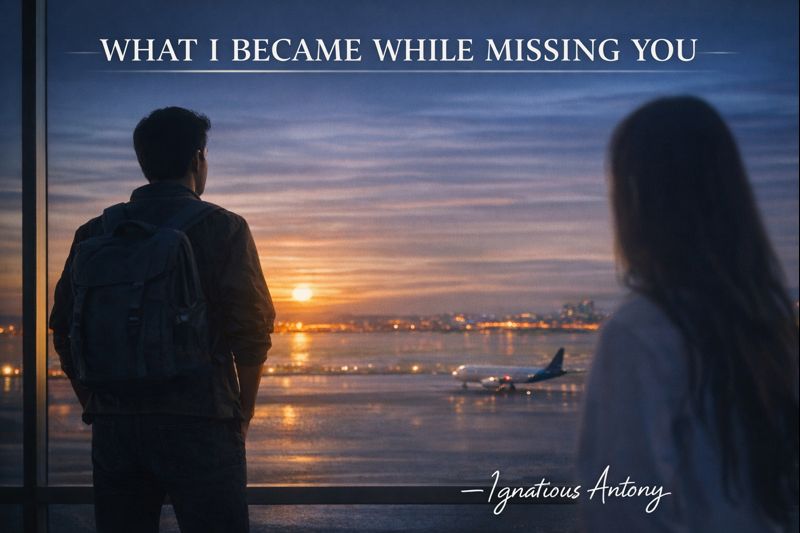
What I Became While Missing You
I leave home folded like a prayer in my bag,
light to carry, heavy to live with.
The bus moves forward, but my heart keeps walking back
along dusty roads that still pronounce my name correctly.
My village clings to me like soil on my shoes,
mother’s love like a lamp burning after the door is locked,
how do you say goodbye to breath,
or to hands that taught you how to stand?
I carry a loan on my shoulders,
not numbers, but my parents’ bent mornings,
their quiet faith stitched into borrowed rupees,
each one beating like a heart that isn’t fully mine.
Here, dreams suffocate between noise and politics,
education fenced by arguments louder than truth.
So I leave, not from lack of love,
but from the hunger to return with dignity.
Australia waits like a distant shore,
bright, cold, unsure.
I chase degrees, but really, I chase a life
where effort finally has a straight road,
where money is not greed but relief.
Yet she stays behind.
Her absence sits beside me everywhere,
on crowded trains, in shared rooms,
in smiles that arrive unfinished.
Homesickness comes at night like rain through a cracked roof,
and missing her feels like a song cut mid-breath,
a sentence forever searching for its ending.
Some nights, success tastes like saltless food,
and memory weighs more than luggage.
Still, I let the ache sharpen me,
stone shaping a blade.
Loneliness becomes discipline,
tears quietly turned into fuel.
I will not return empty.
One day I will place my success
gently at my parents’ feet,
like a lamp lit from a far country,
and say, this pain was the price.
And if she is there, I will meet her eyes without shame.
If she is not, I will still carry her with respect,
the first deep loss that taught me
how strong love can make a man.
I leave with pain in my chest,
I return with purpose in my hands.
Between these two shores,
I become the life I promised
the day I packed my home
inside a backpack.
Reflection on “What I Became While Missing You”
This poem is not only about leaving home; it is about what leaving does to a person. It speaks of migration not as movement across borders, but as an inner transformation shaped by love, loss, responsibility, and hope. The poem carries the quiet voice of someone who leaves unwillingly, not to escape home, but to protect its future.
The opening image, “I leave home folded like a prayer in my bag”, immediately sets the emotional tone. Home is not a place left behind; it is something sacred, carefully folded and carried. A prayer is light, intangible, yet deeply powerful. In the same way, home becomes something invisible but heavy to live with. The contrast between “light to carry” and “heavy to live with” reflects the emotional burden migrants often carry, nothing visible to others, yet constantly present.
The line “The bus moves forward, but my heart keeps walking back” captures the migrant’s split existence. The body obeys necessity, while the heart refuses to detach. The dusty roads that “pronounce my name correctly” suggest belonging; home knows the speaker fully, without explanation. This is not just nostalgia; it is the pain of being known deeply in one place and anonymous in another.
Images of the village and mother intensify this sense of rootedness. The village clinging “like soil on my shoes” shows how origins stay attached no matter how far one travels. The mother’s love, compared to “a lamp burning after the door is locked,” is one of the poem’s most tender metaphors. It suggests love that does not demand presence, love that continues quietly even in absence. The question “how do you say goodbye to breath?” makes departure feel unnatural, as if leaving home is like trying to stop breathing.
When the poem speaks of the loan, the tone shifts from emotional to ethical weight. The debt is not financial alone; it is embodied in “parents’ bent mornings” and “quiet faith stitched into borrowed rupees.” Money here becomes a moral responsibility. Each rupee “beating like a heart that isn’t fully mine” shows how the speaker’s life is no longer entirely their own; it carries the pulse of parental sacrifice.
The poem then widens its lens to social reality. Dreams suffocate in “noise and politics,” and education is fenced by arguments louder than truth. This is not bitterness but realism. Leaving becomes an act of survival rather than an act of ambition. The line “not from lack of love, but from the hunger to return with dignity” is important; it reframes migration as loyalty rather than abandonment.
Australia appears as a distant shore, “bright, cold, unsure.” It is not romanticised. It promises opportunity, but not comfort. Degrees are pursued, but the deeper pursuit is relief, money not as greed, but as breathing space. This distinction is important: success here is not excess, but stability.
The emotional core deepens when “she stays behind.” Her absence is described not dramatically, but quietly; it “sits beside me everywhere.” This person is present through absence, shaping daily life in subtle ways. Homesickness arrives “like rain through a cracked roof”, uninvited, persistent, soaking the speaker in moments of vulnerability. The metaphor of a song cut mid-breath or a sentence without an ending perfectly captures unresolved love and unfinished futures.
Even success is questioned. When it “tastes like saltless food,” the poem admits that achievement without shared joy feels incomplete. Memory outweighs luggage; emotional baggage surpasses physical belongings. Yet the poem does not remain in sorrow. Pain is transformed. The ache sharpens the speaker “like stone shaping a blade.” Loneliness becomes discipline; tears become fuel. This is where the poem quietly declares resilience, not loud, not triumphant, but steady.
The promise of return anchors the poem’s hope. Success is not for display; it is placed “gently at my parents’ feet,” like a lamp brought home from afar. The speaker does not deny the cost but names it honestly: “this pain was the price.” That acknowledgement gives meaning to suffering.
The closing lines resolve love with maturity. Whether she is there or not, her role remains honoured. She becomes “the first deep loss that taught me how strong love can make a man.” Love is not reduced to possession or reunion; it becomes a shaping force.
The final image, “Between these two shores, I become the life I promised”, captures the poem’s title perfectly. The speaker is not defined only by departure or arrival, but by what happens in between. Becoming is a process forged by distance, responsibility, longing, and hope. Packing home inside a backpack becomes the central truth: home is no longer a place, it is a purpose carried forward.
In essence
This poem is a quiet testimony of modern migration:
- leaving without resentment,
- loving without possession,
- suffering without self-pity,
- and hoping without guarantees.
It honours parents, acknowledges lost love, questions success, and still believes in return, not just to a place, but to a fuller version of oneself.