A Letter to My Future Self
A Letter to My Future Self
Dear future me,
when your days stack like stones on your chest
and time leaks like sand through hurried fingers,
pause,
listen to your breath
the way thirsty earth listens to rain.
Your dreams still burn like scattered stars,
bright and restless, pulling you forward like tides.
Your talent learned its voice early,
your hands learned work like a second language,
and success arrived, quiet as dawn,
yet remember, even the sun
kneels to rest each evening.
Do not weigh life only by ladders and applause,
which rust like forgotten medals;
weigh it by mornings that open slowly,
by tea cooling like patience
between honest silences.
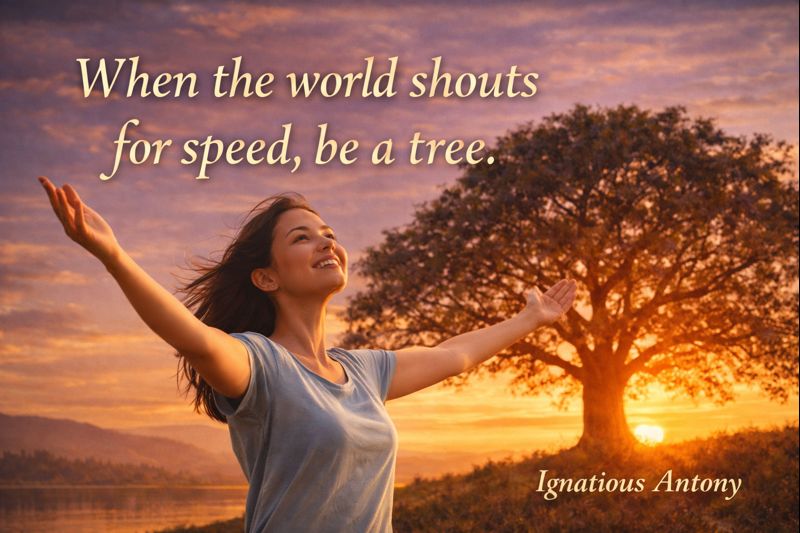
When the world shouts for speed, be a tree,
rooted like a promise,
standing while seasons argue around you,
letting storms comb your branches
without stealing your shade.
Carry courage like a compass in your pocket,
steady and unseen,
not like a drum that demands attention.
Be brave enough to stop,
kind enough to bend,
to notice sorrow hiding
behind practiced smiles
and shoulders bowed like tired bridges.
Let gratitude walk beside you
like an old friend who needs no words,
reminding you that abundance whispers
and contentment drinks slowly.
If money comes, receive it without guilt,
like shelter from sudden rain.
If status follows, wear it lightly,
like a coat you can remove at home.
If fame knocks, greet it briefly,
remembering it is a visitor, not a roof.
For happiness lives elsewhere,
in peace that settles like evening light,
in health that breathes without effort,
in love that waits without counting,
in affection that needs no stage.
It lives in time shared slowly,
meals growing cold in conversation,
laughter spilling past the clock,
hands held long after words are done.
Slow down, even when your legs remember how to run.
Stay awhile on the road, even when the destination calls.
And when the world grows sharp and loud,
be the pause,
the soft place where noise loses its teeth,
proof that success can walk barefoot,
hands open like empty bowls,
heart unarmoured,
and still full.
Reflection on “A Letter to My Future Self”
This poem reads like a whispered reminder, written at a moment of clarity when ambition is strong but wisdom is quietly awake. It is not a rejection of success or effort; instead, it offers careful instruction on how to live without being consumed by what one achieves.
The speaker writes to a future self, knowing that time, pressure, and success can slowly erode gentleness unless it is consciously protected.
The opening lines immediately ground the poem in physical and emotional weight. Days “stack like stones on your chest” capture how responsibility accumulates silently, pressing down not all at once but day by day.
Time “leaking like sand through hurried fingers” reflects modern life, busy, rushed, and always slipping away.
The instruction to pause and listen to one’s breath “the way thirsty earth listens to rain” is deeply compassionate.
It suggests that rest and stillness are not indulgences but necessities, as essential as water to dry soil.
The poem then acknowledges ambition honestly. Dreams burn “like scattered stars,” and talent has already found its voice. Work is no longer foreign; it has become “a second language.” Success has arrived, but “quiet as dawn,” not dramatic, not loud.
This restraint is important. Success is recognised, but it is deliberately softened. The reminder that “even the sun kneels to rest each evening” is a powerful equaliser.
No matter how bright or important one becomes, rest is not weakness; it is natural law.
A central theme of the poem is redefining measurement. The speaker warns against measuring life only by “ladders and applause,” images that suggest upward movement and public approval.
These symbols are exposed as temporary, medals that rust and lose their shine. In contrast, true value lies in slow mornings, shared tea, and honest silence rather than awkwardness.
These are moments that cannot be displayed or counted, yet they are deeply nourishing.
When the poem says, “When the world shouts for speed, be a tree,” it offers one of its strongest metaphors. The tree symbolises steadiness, patience, and rootedness.
It does not compete with the wind or rush with the seasons; it endures. Storms may pass through its branches, but its shade remains. This is a quiet form of strength, resilience without aggression.
Courage in this poem is not loud or performative. It is “a compass in your pocket,” unseen yet reliable.
This image suggests inner guidance rather than external validation. Bravery here includes stopping, bending, and noticing others’ pain.
The poem gently shifts the focus outward, asking the future self to remain kind, observant, and humane, especially towards hidden suffering carried behind smiles and bowed shoulders.
Gratitude is personified as an old friend who walks beside the speaker. This is a beautiful image because it frees gratitude from obligation and turns it into a form of companionship.
It reminds us that abundance does not announce itself loudly; it whispers. Contentment “drinks slowly,” suggesting that joy is savoured, not rushed.
The poem’s treatment of money, status, and fame is balanced and mature. None of them is dismissed.
Money is “shelter from sudden rain,” status a coat that can be removed, and fame a visitor who must not be allowed to stay too long.
These metaphors acknowledge usefulness while warning against dependence. None of these should become the roof under which one lives.
The final movement of the poem locates happiness clearly and firmly, not in achievement but in peace, health, love, affection, and shared time.
These are depicted through ordinary, intimate scenes: meals growing cold amid conversation, laughter that ignores the clock, hands held after words end. These moments are small, yet enduring.
The closing lines bring the poem full circle. Even if the future self can run fast, they are urged to slow down. Even if the destination is known, the road must still be travelled.
When the world becomes harsh and noisy, the speaker asks the future self to become the pause, the soft place. The final image of success, “walking barefoot, hands open, heart unarmoured”, is deeply human. It suggests a life where achievement exists without hardening the soul.
In essence
This poem is a moral compass for a life of ambition.
It reminds the reader that:
- Success is meaningful only if it does not cost peace.
- Speed is impressive, but steadiness is sustaining.
- Wealth, status, and fame are tools, not homes.
- The richest life is one where time, love, and kindness are not postponed.
It is a letter written in advance, with the hope that the future self will remember what truly matters, not when life is easy, but when it is full.