
The Quiet Road After the Race
The Quiet Road After the Race
Once I, too, walked with hurried feet,
Chasing the glitter of distant hills.
The world kept whispering in my ear,
“Run faster… There is more to win.”
Men built towers of gold and steel,
Counting numbers late into the night.
Some gained fortunes, some gained fame,
Yet their eyes still searched for something more.
I often wondered, watching them,
Why does a man who owns the ocean
Still thirsty like a traveller in the desert?
Is it money… glory… or a restless heart?
Years passed like clouds across the sky.
My steps grew slower without my knowing.
One evening, I stopped beside a quiet road
And listened to the wind in the trees.
In that moment, a small truth arrived:
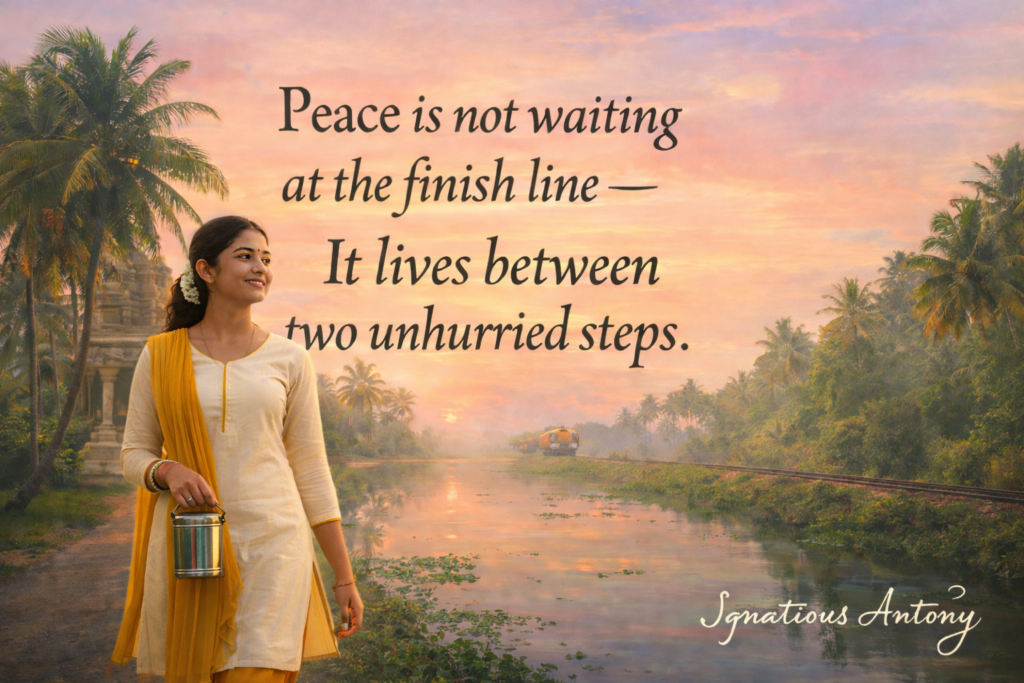
Peace was never waiting at the finish line.
It was hiding in the gentle spaces
Between two unhurried steps.
Now I walk slowly through my days.
I greet the sun like an old friend.
And I have learned at last,
Life is not a race to be won,
But a road meant to be walked with wonder.
Reflection on “The Quiet Road After the Race”
This poem is a thoughtful reflection on the restless pursuit of success that often defines modern life.
It speaks in the voice of someone who has spent many years chasing ambition, wealth, and achievement, only to discover later that peace and contentment were never waiting at the finish line.
At the beginning of the poem, the speaker describes a familiar human experience, the feeling of always being urged to run faster.
Society constantly encourages people to compete, to achieve more, to climb higher. Success is often measured by wealth, fame, or power, and many people spend their lives racing toward these distant goals.
The image of “chasing the glitter of distant hills” captures this illusion perfectly: the promise of happiness always appears somewhere ahead, never where we are.
The poem then observes those who have seemingly reached the top. Some have built great fortunes and powerful empires, yet even they appear unsatisfied.
Their eyes continue searching for something more. This moment introduces an important philosophical question: why does a person who possesses so much still feel empty?
The metaphor of a man who “owns the ocean” but remains thirsty like a traveller in the desert suggests that material success alone cannot satisfy the deeper hunger of the human heart.
Over time, the speaker’s pace begins to change. The transformation does not happen suddenly. It occurs gradually, almost without notice, as the years drift by “like clouds across the sky.”
This gentle slowing of life eventually leads to a moment of quiet awareness. Standing beside a calm road, listening to the wind in the trees, the speaker experiences a simple yet powerful realisation.
The poem reveals that peace is not something waiting at the end of a long struggle. It is not a prize given to those who win the race of life.
Instead, peace is already present in the quiet spaces of everyday living, in moments of stillness, in the beauty of nature, and in the freedom to move through life without constant urgency.
By the end of the poem, the speaker has adopted a new way of living. Instead of rushing forward in search of distant rewards, he walks slowly and greets the sun like an old friend.
This image symbolises acceptance, gratitude, and harmony with the present moment.
The poem ultimately suggests a gentle but profound truth: life is not meant to be a competition. It is a journey filled with small wonders that can only be seen when we slow down.
True fulfilment comes not from reaching the end of the road first, but from learning to walk the road with patience, awareness, and quiet joy.