
The Stillness of Memory’s Well
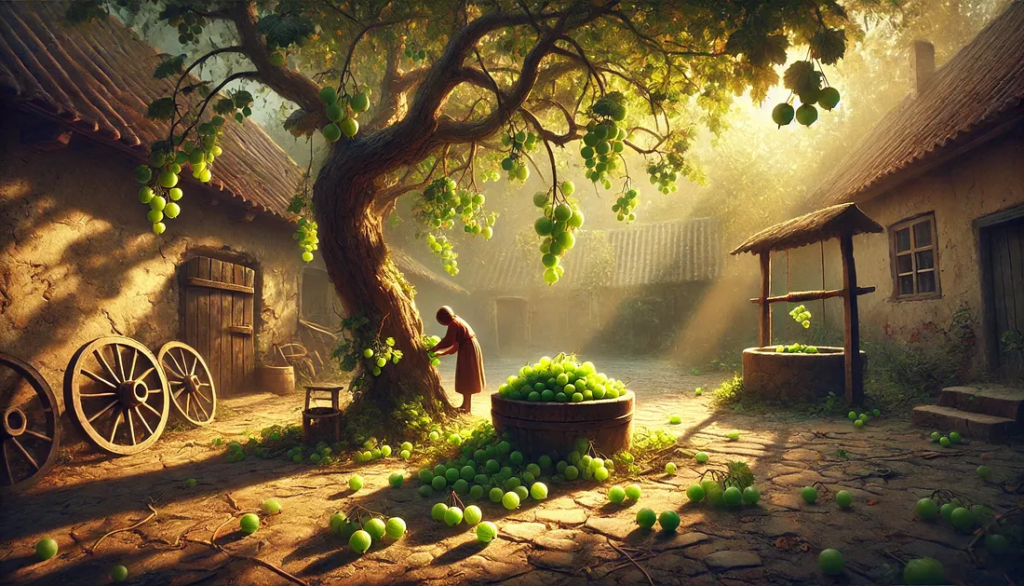
Once again, I find myself lost in the courtyard of my memories, where they drift like restless clouds.
The old gooseberry tree, its branches bowing low, seems to offer its treasures to me.
Like a child reaching for the stars, I yearn to pluck a fruit and taste the bittersweetness that time has woven together.
When the ripe berries tumble, I gather them like I’m collecting pieces of a forgotten past.
I crave the taste, joy and sorrow mingling on my tongue, much like life itself, both sweet and sour.
The well in the yard stands still, its water a silent mirror.
I long to draw from it, drinking deeply as though savouring a secret whispered by the earth.
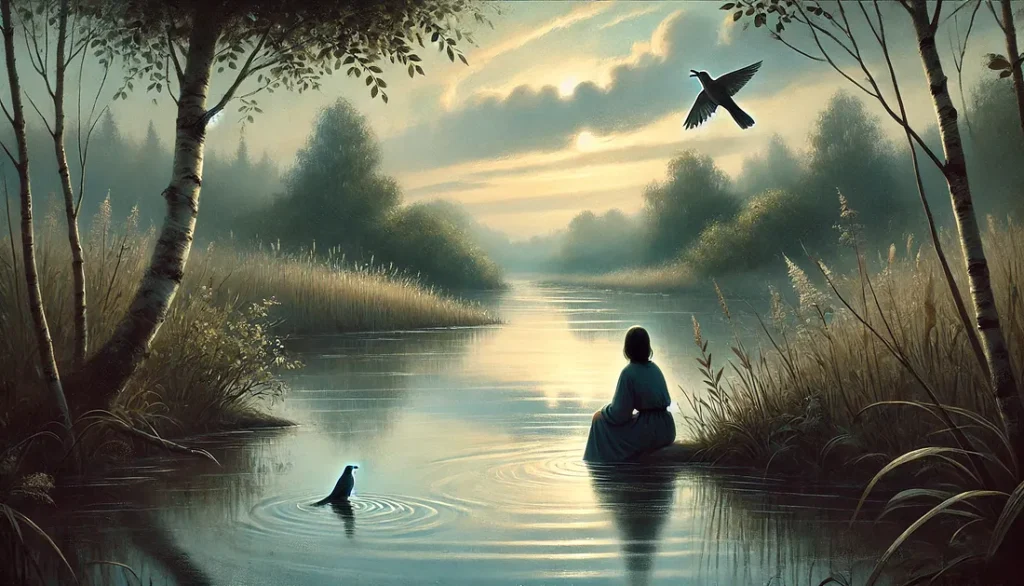
I picture myself by the river again, my thoughts drifting softly with the gentle flow.
The cuckoo sings, its melody filling the air, and I wish to sing in reply, weaving my voice into the song of nature.
But when the bird takes flight, I want to whisper, “Please, stay.”
Even though I know these are just dreams, like chasing shadows at twilight, I can’t let go.
Like a child clutching the wind, I still hold on to them, desperate to hold on to the past that has shaped everything I am today.
These words are inspired by the timeless beauty and deep nostalgia found in the poetry of the great Malayalam poet O N V Kurup. Shri. Kurup’s verses sing of lost moments and quiet longings.
Reflection on the Poem ” The Stillness of Memory’s Well”
This poem is a quiet walk through the garden of memory. The speaker returns to a place that may no longer exist in the physical world but lives vividly inside the heart. The courtyard, the gooseberry tree, the well, the river, and the song of the cuckoo are not just objects from childhood; they are doors that open into the past.
The gooseberry tree becomes a powerful symbol in the poem. Gooseberries are known for their unique, sour-sweet taste. When the speaker longs to taste them again, it is not really the fruit that is desired. It is the experience of life itself. The sweet moments of joy and the sour moments of pain are inseparable. Together they form the flavour of memory.
Life rarely offers pure sweetness. Its true taste is a delicate mixture of joy and sorrow.
The well in the yard represents something deeper. A well stores water quietly beneath the ground, hidden from view. In the same way, our memories lie deep inside us, waiting patiently until a moment of silence allows them to rise to the surface. When the speaker imagines drinking from the well, it feels like drinking from the hidden reservoir of the past.
The river in the poem carries another meaning. Rivers never stop moving. They flow forward, just like time. Yet when we sit beside a river, we often find ourselves thinking about things that have already passed. The river reminds us that life moves on, but our thoughts still drift gently toward yesterday.
Time flows forward like a river, but memory often walks in the opposite direction.
The cuckoo’s song adds a feeling of tenderness to the poem. The bird sings freely, filling the air with its voice. The speaker wishes to join the song, as if becoming part of nature itself. But when the bird flies away, the speaker wants it to stay. This moment reveals a deep human truth, the desire to hold on to what is beautiful and fleeting.
Human hearts are strange. We know that moments must pass, yet we still wish to hold them forever.
In the final lines, the poet admits that these scenes are dreams. The past cannot be truly returned to. Childhood courtyards, old trees, and familiar wells belong to another time. Yet the poet continues to hold on to these memories “like a child clutching the wind.” This image captures the innocence and helplessness of nostalgia. We know the wind cannot be held, but our hands still try.
The poem gently reminds us that memory is not merely about looking backwards. It is about understanding who we have become. The places we once lived, the small joys we experienced, and the quiet moments we shared with nature all shape our identity.
The past may be gone, but it continues to live quietly within us, shaping the person we are today.
In the end, the poem leaves us with a soft and comforting thought. Memories may be fragile and unreachable, like shadows at twilight. Yet they remain precious, because they remind us that every stage of life, sweet or sour, has helped create the story of who we are.