The Flame That Waits
The Flame That Waits
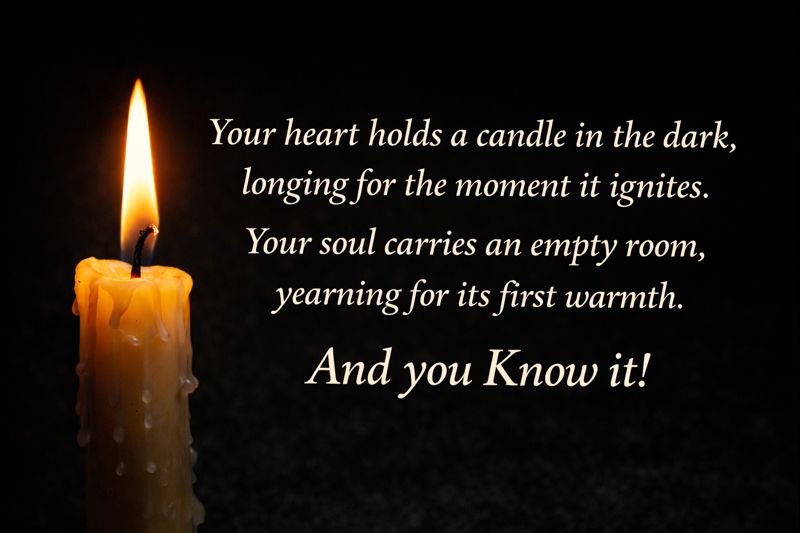
A small flame rests in your heart,
like a lamp in a temple before dawn.
It waits not for force, but for stillness,
for the hush where fire learns its name.
Your soul is an open courtyard,
emptied by time, swept by longing winds.
When the first warmth arrives, it bows inward,
And you know the truth, as the body knows breath.
A Reflection on “The Flame That Waits”
This poem speaks in a low voice. It does not argue, instruct, or persuade. It simply points inward, trusting the reader to recognise something already known but rarely named.
The opening image, “A small flame rests in your heart”, suggests that what we seek is not absent. The flame is already there. It is small, yes, but alive. This matters deeply. The poem is not about acquiring wisdom, purpose, or peace; it is about acknowledging what quietly survives within us, even when life feels dim or scattered. The flame rests; it does not struggle. It exists without urgency.
The simile “like a lamp in a temple before dawn” deepens this idea. In many Eastern traditions, a temple before dawn is not empty or inactive; it is sacred in its waiting. The lamp is prepared. The wick is set. Oil is present. Nothing is missing except the right moment. This waiting is not neglect; it is reverence. The poem suggests that our inner life, too, has such moments of reverent pause, where forcing light would be a kind of violence.
When the poem says, “It waits not for force, but for stillness,” it offers a quiet correction to modern habits. We are trained to push, chase, fix, and conquer. But the flame responds to something gentler. Stillness here is not laziness or withdrawal; it is attentive silence. It is the inner hush where distractions loosen their grip and the self becomes audible again. Only in that hush does “fire learn its name”, a beautiful line that suggests identity is revealed, not invented.
The poem then widens its space, moving from heart to soul. “Your soul is an open courtyard” is a powerful image. A courtyard is exposed to the sky and the weather. It is not protected or enclosed. Over time, it has been “emptied by time”; loss, disappointment, ageing, and experience have stripped it of illusions. Yet emptiness here is not failure. It is preparation. An empty courtyard can receive sunlight, rain, and air freely.
The “longing winds” sweeping through this space suggest a restlessness that many people feel but cannot explain. The poem treats this longing with respect. It is not something to escape or suppress. It is movement. It keeps the soul awake. In Eastern thought, longing often signals that the self is close to something true but unnamed.
The turning point comes quietly: “When the first warmth arrives.” There is no explosion, no dramatic revelation. Just warmth. And the response is deeply telling, “it bows inward.” This inward bow reflects humility, recognition, and acceptance. The soul does not grasp or claim the warmth. It acknowledges it. This is a moment of alignment rather than achievement.
The final line, “and you know the truth, as the body knows breath”, brings the poem to rest. This knowing is not intellectual or logical. It is instinctive, embodied, and undeniable. Just as the body does not debate breathing, the awakened self does not debate truth. It simply knows, quietly and completely.
Overall, “The Flame That Waits” reminds us that inner awakening does not arrive through effort alone. It arrives through readiness. Through silence. Through the courage to remain open. The poem gently reassures the reader:
Nothing essential is missing.
Nothing is late.
The flame has been waiting patiently,
And so have you.