
In the Shade of Sweet Memories
Fading Dreams and Flowered Garlands
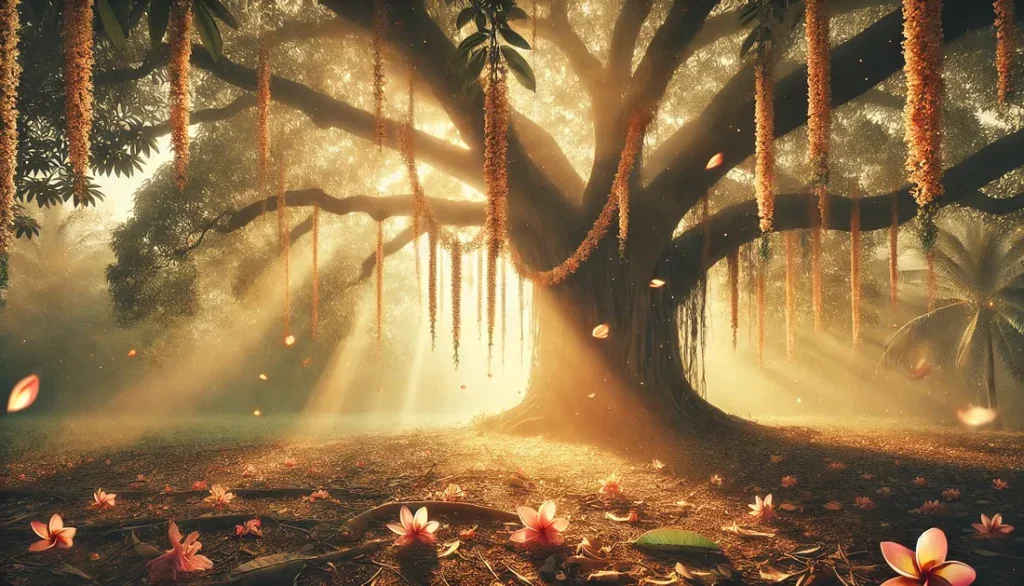
In the Shade of Sweet Memories
Unfurl the beauty of our past like a garland of flowers, each petal a precious memory.
Those moments, once so near, now drift like leaves in the wind, out of reach but never forgotten.
Please take us back to that mango tree shade, that sacred place where time stood still and joy blossomed like spring flowers.
How distant it seems now, like a dream fading with the morning light.
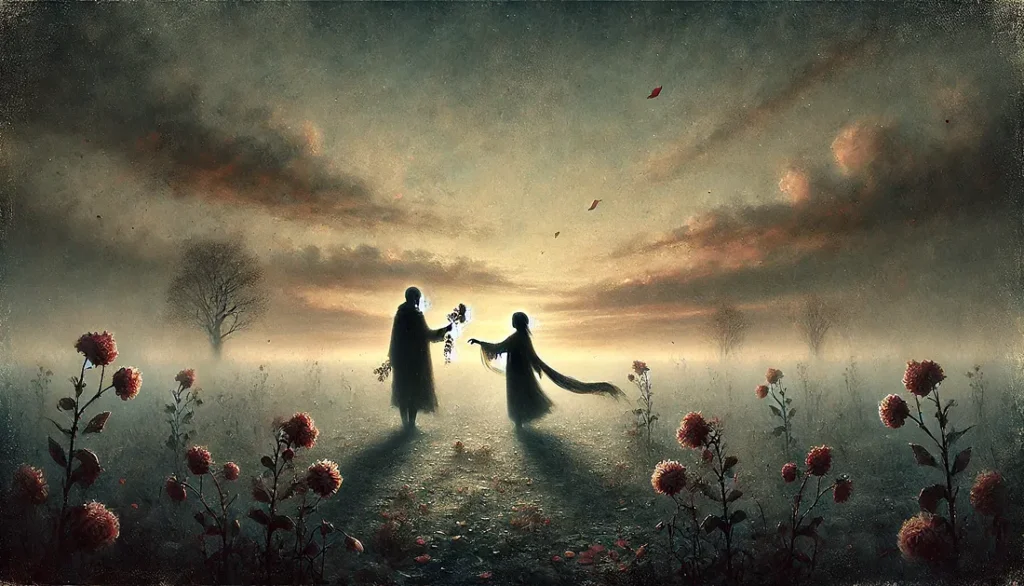
Our heartbeats, once in perfect rhythm, now stumble, burdened by the weight of lost years.
Every breath hums with the ache of what is gone, like a sigh carried by the wind.
Won’t you lift the garland of memories onto your shoulders and take us away? Away from the present, away from the empty spaces that echo with what once was.
Take us back to those days when the air was filled with laughter, light and sweet, like the scent of blooming flowers.
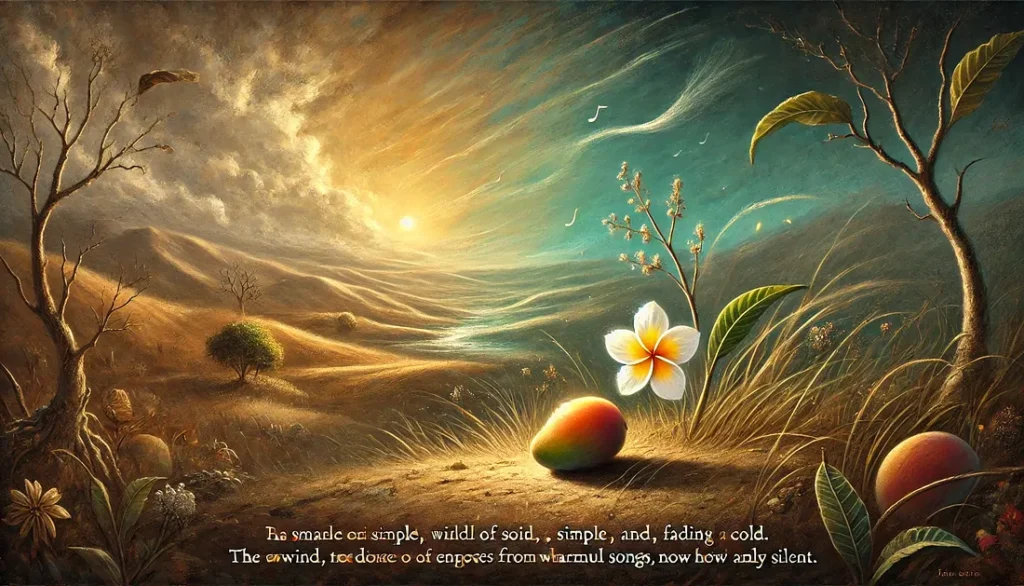
We built our world with so little, just a handful of soil and a simple flower, but it was enough.
It was everything. A single ripe mango falling to the ground was like a gift from the sky, and the wind, kind and gentle, would sweep away all worries like a mother’s soft touch.
But now, the wind feels cold, and the ground beneath us is hard and silent.
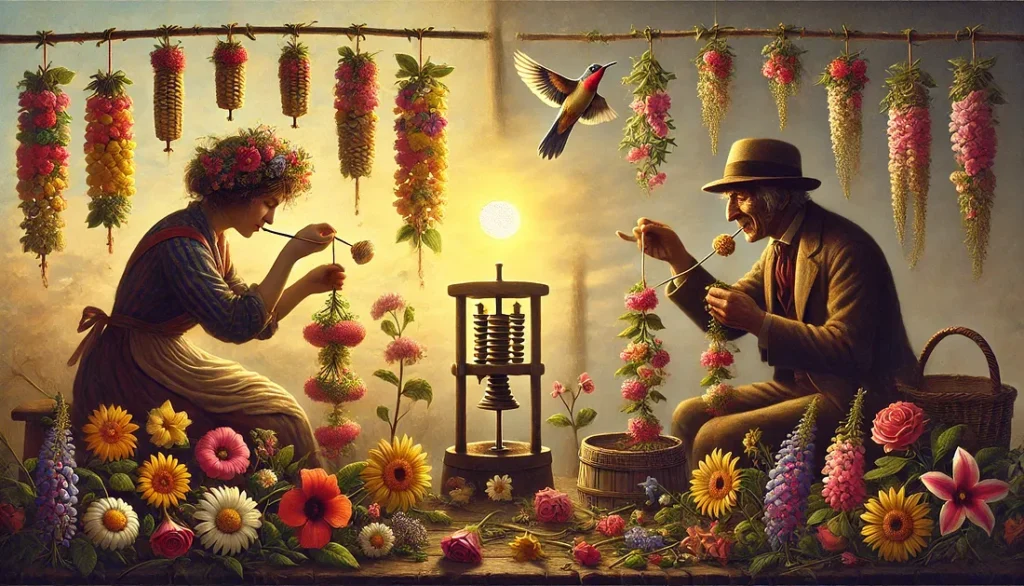
We plucked flowers like little pieces of happiness, stringing them into garlands we wore with pride.
We whistled with the cuckoo bird, our voices rising like the morning sun.
But now, the flowers have wilted, and the birds no longer sing our tune.
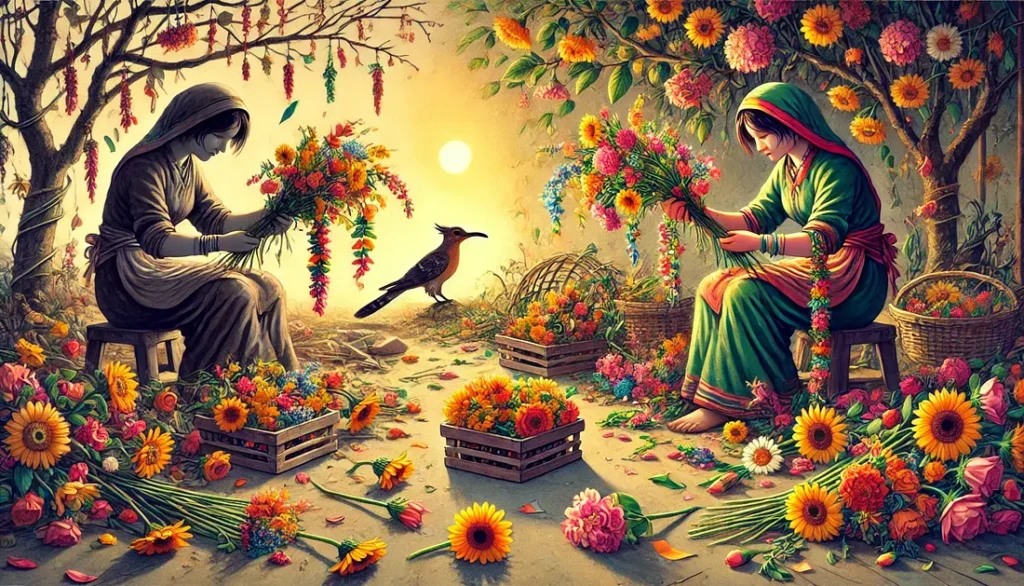
Even the honey, once so sweet, now tastes bitter on our tongues, a bitter reminder of what we have lost.
We were kings and queens in our small world, living like royalty in the palace of our hearts.

But those days have passed like a river flowing too fast to catch.
Now, all that remains are the memories, heavy and bittersweet, like a flower pressed between the pages of a book, forever preserved but no longer alive.
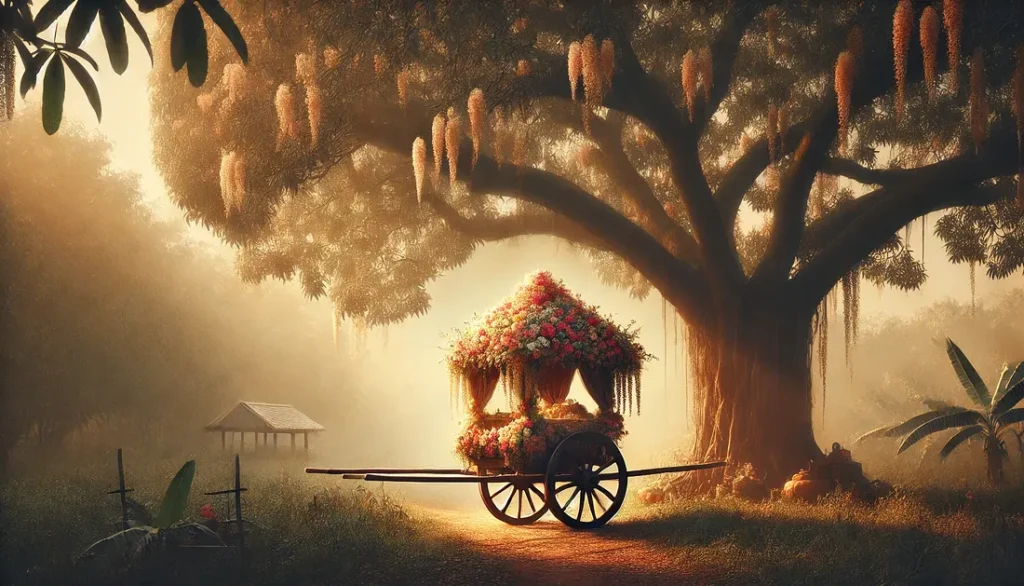
Oh, sweet memories, please bring the palanquin made of flowers.
Take us to that mango tree shade once more, just one more time.
Let us feel the warmth of those lost moments, even if only for a fleeting second.
A Reflection on “In the Shade of Sweet Memories”
“In the Shade of Sweet Memories” is a quiet, aching conversation with the past. It does not shout its grief or decorate its longing with drama. Instead, it speaks in the soft language of remembrance, through flowers, wind, shade, birds, and fruit, things that once held joy without effort. The poem feels less like something written and more like something remembered.
From the opening image of a garland of flowers, the poem establishes memory as something sacred and delicate. A garland is not permanent; it wilts, dries, and fades. Yet, while it lasts, it is worn close to the body, touching the skin and carrying fragrance. In the same way, the past in this poem is not frozen in time. It drifts like leaves in the wind, out of reach, yet impossible to forget. Memory here is not possession; it is presence without touch.
The mango tree’s shade becomes the emotional heart of the poem. It is not just a tree, but a sanctuary. Under that shade, time once slowed, perhaps even stopped. Life felt protected, simple, and whole. This place represents childhood, innocence, and belonging, a time when happiness did not need to be chased or explained. The request to be taken back there is not about returning to youth, but about returning to a feeling: safety, warmth, and unbroken joy.
As the poem progresses, the distance between then and now grows heavier. The present is described not through events, but through absence. Heartbeats that once moved in harmony now falter. Breathing itself carries ache. This is a powerful truth the poem touches gently: loss does not always announce itself loudly. Sometimes it hums quietly inside us, woven into our everyday breaths.
The simplicity of the remembered world is one of the poem’s most moving elements. A handful of soil. A single flower. One ripe mango falls to the ground. These were enough. The poem reminds us how richness once came from small things, and how the heart once knew how to receive them fully. The wind, described like a mother’s soft touch, suggests care without conditions. Nature itself was a companion, not a backdrop.
The contrast with the present is stark and painful. The same wind is now cold. The ground is hard and silent. Flowers wilt. Birds fall quiet. Even honey loses its sweetness. This change is not because the world has turned cruel, but because the self that once tasted it has changed. The poem understands that loss is not only about what is gone, but also about who we have become over time.
There is a quiet dignity in how the poem addresses memory. It does not demand restoration. It asks for a palanquin made of flowers, a symbolic return, gentle and brief. Just one more moment. Just one more second of warmth. This longing feels deeply human. It accepts the truth of time while still seeking comfort from remembrance.
The image of being kings and queens in a small world is especially touching. It suggests that greatness once came from imagination and connection, not power or wealth. That inner kingdom still exists, but only as memory now. Like a river flowing too fast to catch, those days have passed, leaving behind reflections on the water’s surface.
The final metaphor, a flower pressed between the pages of a book, captures the essence of the poem perfectly. The memory is preserved. It is safe. It can be revisited. But it no longer breathes. It no longer grows. This is the quiet sorrow the poem leaves with us: memory endures, but life cannot be re-entered.
“In the Shade of Sweet Memories” is ultimately a meditation on impermanence and tenderness. It reminds us that the past does not return, but it continues to shape us in silence. The mango tree’s shade may be far away in time, but it still casts a cool, bittersweet, enduring shadow across the heart.
Inspired by the timeless poetry of Shri O N V Kurup, one of the greatest Malayalam poets. His words carry the soul of Kerala, evoking deep emotions of love, nature, and the passage of time. Known for his lyrical mastery and humanistic themes, ONV Kurup’s work continues to resonate, offering solace and inspiration through its profound beauty and simplicity.