
Cleopatra
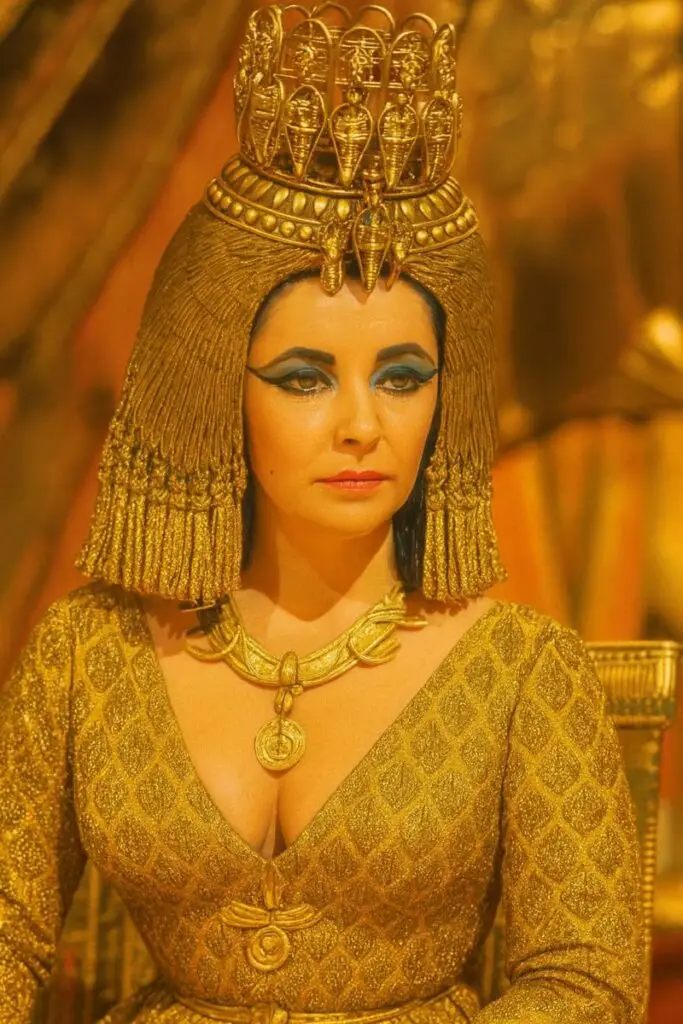
The Real Story of Cleopatra
When most people hear the name Cleopatra, they imagine a beautiful queen with shining gold makeup.
They think of a woman who fell in love with Julius Caesar and Mark Antony.
They remember stories that say she bathed in milk and died from a snake bite.
But that picture is not the whole truth.
What people do not imagine is a 17-year-old girl sitting quietly inside the Library of Alexandria, surrounded by thousands of scrolls made of papyrus.
They do not imagine her carefully studying ancient Egyptian hieroglyphs, symbols that even the people in her own palace could not read.
But that is who Cleopatra really was.
Where Cleopatra Came From
Cleopatra’s full name was Cleopatra VII.
She was born into the Ptolemaic family, a royal family that came from Greece and Macedonia, not Egypt.
For almost 300 years, her family ruled Egypt.
They built great cities, supported scholars, and created the famous Library of Alexandria, one of the most significant centres of learning the world had ever known.
But there was a big problem.
For three hundred years, not one ruler in her family learned the Egyptian language.
They spoke Greek.
They read Greek books.
They lived like Greeks, even though they ruled the Egyptian people.
They ruled Egypt, but they did not truly understand it.
Cleopatra Changed Everything
Cleopatra decided to do something different.
When she became queen at around 18 years old, she had already learned many languages that no one in her family had bothered to learn before.
She learned:
Ancient Egyptian
Aramaic
Hebrew
Languages spoken by people in Ethiopia, Arabia, and Parthia
A Greek writer named Plutarch said that Cleopatra could move from one language to another so easily that she almost never needed a translator.
That had never happened before.
Why Language Gave Her Power
Learning Egyptian was not just about talking.
It was about power.
For the first time in 300 years, a ruler of Egypt could:
Read the hieroglyphs carved on temple walls
Speak directly to priests without help
Take part in religious ceremonies using the real Egyptian language
When Cleopatra stood before her people, she did not dress like a Greek queen.
She dressed like an Egyptian pharaoh.
She spoke like one.
She acted like one.
She did not look like a foreign ruler.
She looked like their queen.
That was brilliant leadership.
Cleopatra the Student
Cleopatra was not only good at politics.
She loved learning.
She grew up in a world full of scholars.
The Library of Alexandria had doctors, scientists, philosophers, mathematicians, and astronomers from many lands.
Cleopatra studied:
Philosophy
Mathematics
Astronomy
Medicine
Economics
How governments work
She spoke with scholars and exchanged ideas with them.
People respected her not only because she was queen, but because she was intelligent.
Some ancient writings suggest she may have written books about medicine or cosmetics.
A medical book written in Greek is credited to someone named “Cleopatra,” but historians are not fully sure if it was written by her or by another woman with the same name.
What we do know is this:
Cleopatra lived in a world where intelligent women existed, even if history later forgot their names.
The Great Loss
Sadly, we will never know everything Cleopatra learned or wrote.
Why?
Because most of it is gone forever.
In 48 BC, when Julius Caesar came to Alexandria, a fire broke out during fighting in the city.
Some buildings that stored books from the library were burned.
Later, over many years, more parts of the library were destroyed.
Some books were lost during wars.
Some were destroyed because of religion.
Some were simply forgotten and left to decay.
By the year 391 AD, the last major place holding ancient knowledge, the Serapeum, was destroyed.
With it vanished:
Medical knowledge
Science and astronomy
Poetry and philosophy
Possibly even Cleopatra’s own writings
Thousands of years of wisdom disappeared.
How History Treated Cleopatra
Most of what we know about Cleopatra comes from Roman writers.
But these writers were her enemies.
Rome wanted to explain why it conquered Egypt.
So they painted Cleopatra as:
A dangerous seductress
A manipulative woman
Someone who used beauty instead of brains
They talked more about her love affairs than her leadership.
But they could not erase everything.
What Could Not Be Erased
They could not erase the fact that:
Cleopatra ruled Egypt for 21 years
She managed Egypt’s economy
She controlled food production
She commanded ships and armies
She united Greek and Egyptian cultures
She was the last pharaoh who could read ancient Egyptian
A Roman statesman named Cicero once met her.
He admitted he did not like her—not because she was beautiful, but because she was too intelligent and she knew it.
What Cleopatra’s Story Teaches Us
History often tells stories about powerful women by focusing on the men around them.
It is easier to talk about:
Cleopatra and Caesar
Cleopatra and Antony
Then to talk about:
Cleopatra the scholar
Cleopatra the strategist
Cleopatra the thinker
It is easier to talk about how she died than how she lived.
But when we look past the myths, we find someone far more interesting.
We find a woman who believed knowledge was power.
Who learned languages others ignored.
Who studied not because she had to, but because she wanted to understand the world.
She knew that ruling people meant knowing them, respecting their history, and speaking their language.
Why She Matters
Cleopatra was not just a queen.
She was a scholar in a world that did not want to remember that women could be both.
Her story reminds us that:
History is often incomplete
Many voices are lost
Knowledge can disappear forever
Somewhere in the ashes of Alexandria, there may have been words written by Cleopatra that would have changed how we remember her.
But we will never know.
What we do know is enough.
She spoke to her people in their own language.
She read their history.
She ruled with intelligence and courage.
And that is why Cleopatra deserves to be remembered, not as a myth, but as a real woman who refused to be anything less than herself.
=====================
Indebted to and
Inspired by the