
Atlas and the Sky That Began to Fall: Stories from Greek Mythology
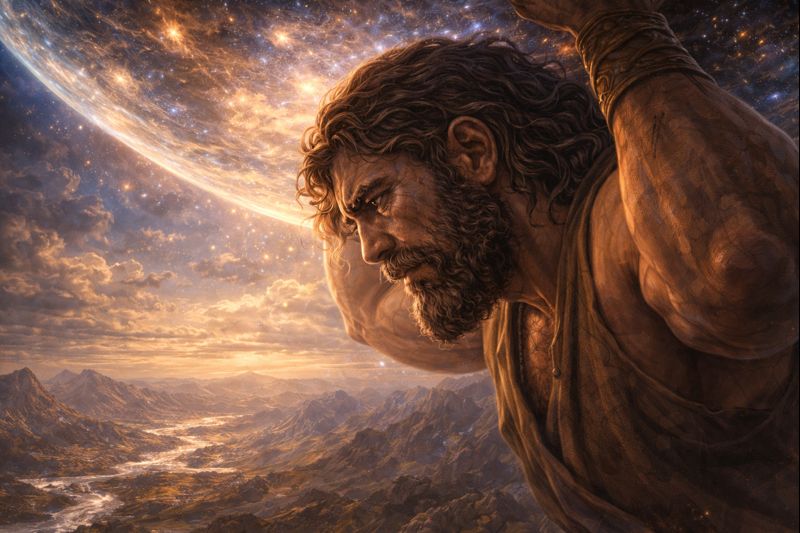
Stories of Greek Mythology: Atlas and the Sky That Began to Fall
After the great fall of Cronos, the Titan king, a new order slowly rose in the world. Zeus, the god of lightning, had taken his place as ruler, and the gods of Mount Olympus began their reign. The long and terrible war between Titans and gods had ended—but peace did not come easily.
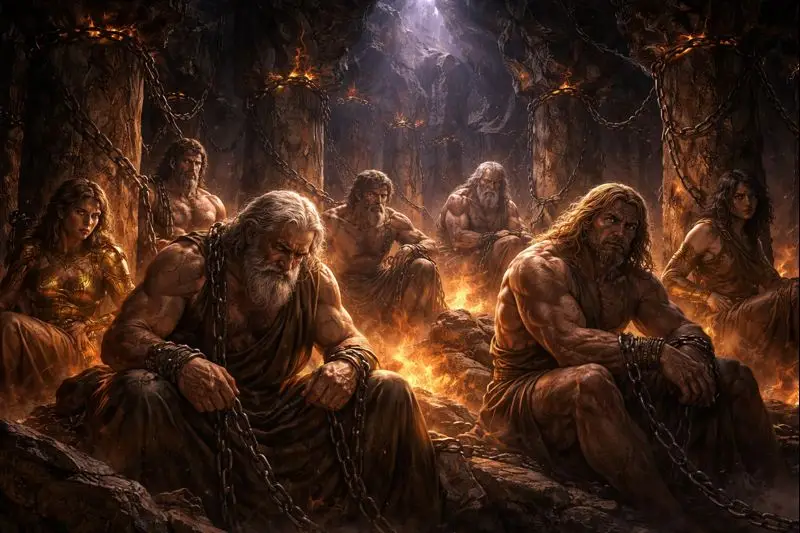
Of the twelve original Titans, the children of Gaia (the Earth) and Uranus (the Sky), only nine remained after the war. All of them, except Rhea, the mother of Zeus, refused to accept Zeus as their king. Because of this, Zeus ordered them to be imprisoned in Tartarus, the deepest and darkest prison beneath the Earth.
The Cyclopes, giant smiths with one eye, and the mighty Hundred-Handers, with their many arms, built strong cells for each Titan. They gladly stood guard, for they had long suffered under the rule of the Titans and now served the Olympian gods.
But not all Titans were punished.
Some of the younger Titans, like Prometheus, who had created humans, and Epimetheus, who had shaped animals and birds, chose to bow before Zeus. They accepted the new order and were allowed to remain free. The world seemed ready to move forward.
Yet something strange began to happen.
Slowly, day by day, the Sky began to sink.
The clouds, which had always floated high above the Earth, came lower and lower. The gods watched in fear from Mount Olympus. Humans hid in caves, afraid that the heavens might crush the world. Even Gaia, the Earth Mother, seemed troubled.
It became clear that something was wrong.
For ages, Cronos and the Titans had held the balance of the world. With their power gone and their strength fading, the Sky had no support.
When old power falls, new responsibility must rise—or chaos follows.
Zeus knew he had to act quickly. The world needed someone strong enough to hold the Sky apart from the Earth.
That was when Zeus turned his attention to Atlas.
Atlas was a younger Titan, but he stood head and shoulders above all others. He was the tallest, the strongest, and the most enduring Titan still living. His strength was legendary, his body like living stone. Atlas had fought fiercely in the Titan war and had never bowed to Zeus.
He did not shout his defiance.
He did not argue.
He refused to kneel.
Pride does not always speak loudly; sometimes it stands silently.
Zeus could have chained Atlas and sent him to Tartarus. But Zeus wanted more than punishment. He wanted a solution—and a lesson.
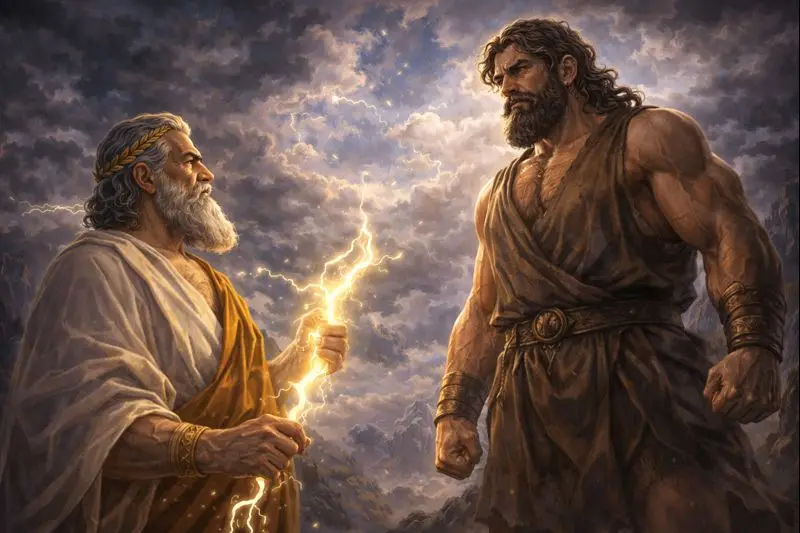
So Zeus spoke to Atlas with a cold smile.
“As you will not kneel before me as your king,” Zeus said, “you shall carry the Sky upon your shoulders for all time. Perhaps that weight will teach you how to bend.”
Atlas did not reply.
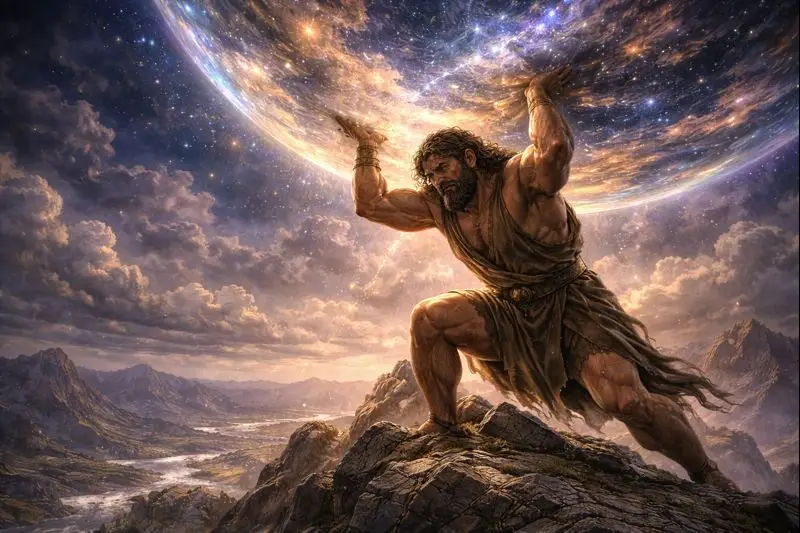
Atlas was taken to the highest mountain at the very edge of the world, where the Sky already rested low, pressing close to the Earth. There, Zeus placed the heavens upon Atlas’s shoulders.
The weight was terrible.
The Sky was not empty—it held clouds, winds, storms, stars, and endless space. Atlas’s arms shook. His shoulders trembled. His knees bent slightly under the burden.
But Atlas did not fall.
His strength was immortal.
Once the Sky rested upon him, Atlas could never move again. If he stepped aside, even for a moment, the Sky would crash down and destroy the world.
Some punishments bind not the body alone, but the soul.
Atlas hated Zeus for this cruel fate. But he loved his fellow Titans. He loved the seas, the mountains, the forests, and the world his family had shaped long before the Olympians ruled.
And so, he stayed.
Day after day.
Year after year.
Age after age.
Atlas stood at the edge of the world, holding the Sky apart from the Earth. He watched rivers change their paths, cities rise and fall, and humans grow and struggle beneath him. Storms beat down upon his back. Snow settled on his hair. The sun burned his skin.
Still, he did not let go.
Not because Zeus commanded him.
But because the world depended on him.
True strength is not shown by power alone, but by what one chooses to carry for others.
Though trapped in one place, Atlas became a silent guardian of the world. His punishment became his purpose. His suffering became protection.
And even Zeus, watching from Mount Olympus, knew one truth:
The Sky did not fall—not because of fear,
But because Atlas chose to stand.
Some heroes are not remembered for victory, but for the burdens they bear so that others may live in peace.