The Lamp That Still Waits for Wind

My love,
How does one learn the language of goodbye?
when the heart still refuses to let go,
trembling like a lone lamp
caught between wind and darkness?
Is love meant to scatter like autumn leaves,
ripped from the branch before they are ready,
spinning helplessly through open air,
forgetting the tree
that once fed them life?
Our memories rise like a living tide,
with hands that pull and do not release,
dragging me into deep, breathless waters
where longing has no shore
And time forgets how to move forward.
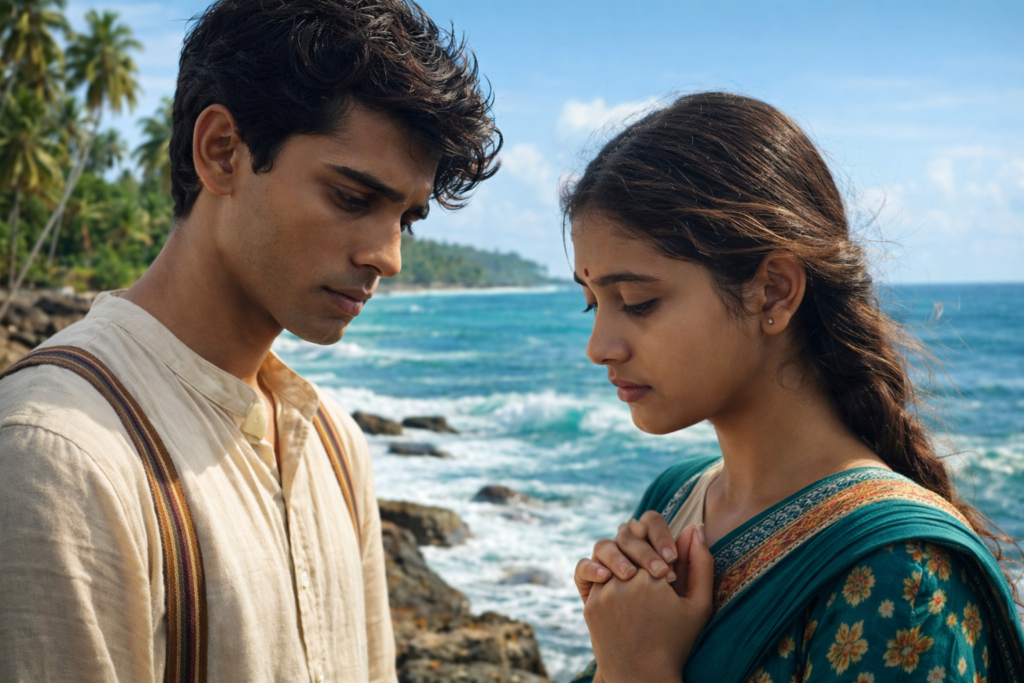
Still, my eyes search the far horizon,
not for hope, but for understanding.
Is there a place where storms grow tired,
where pain loosens its grip
And memory learns how to sleep?
Has the great wave that fell upon us
with unbearable weight
finally broken somewhere beyond sight,
Or does it travel endlessly,
carrying our sorrow
from one silent shore to another?
Oh, blue cloud of my soul,
heavy with unspoken grief,
Have you emptied yourself at last?
Have your tears, once fierce as rain,
softened into dew,
quiet enough to fall
on stones that never learned how to feel?
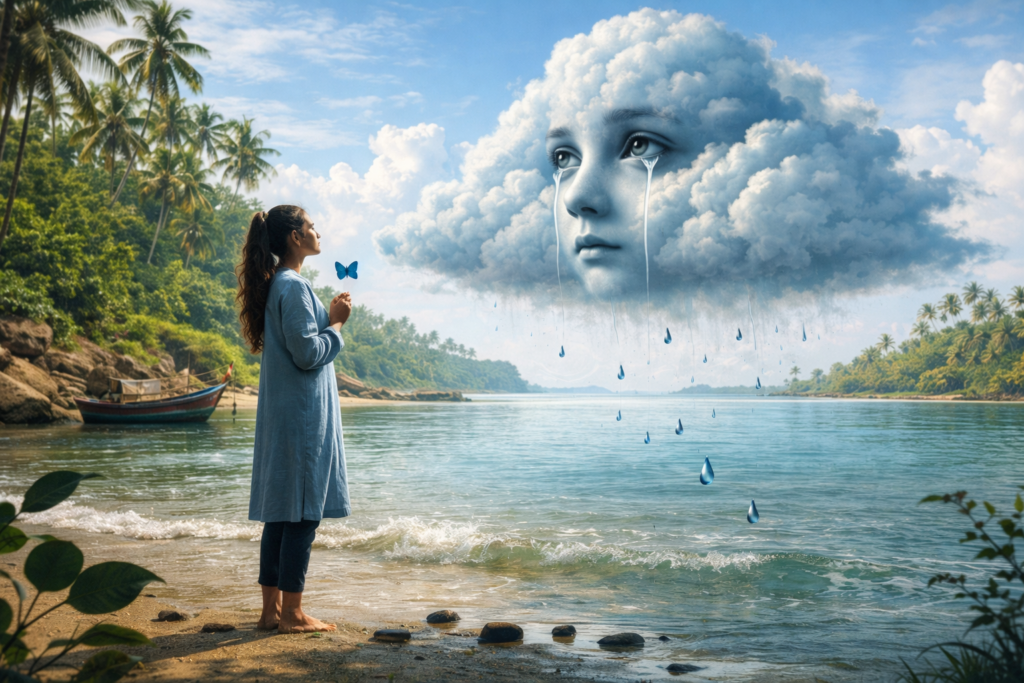
Do you still search the sky?
for a hidden rainbow,
a thin thread of colour
woven into endless grey?
Or have you drifted into forgotten skies,
where dreams we never lived
now wander alone,
unclaimed and untouched?
Silence does not heal.
It only deepens the echo.
Even in stillness, longing remains,
a sound the wind refuses to carry away,
a wound time does not close.
The heart keeps reaching,
not because it believes,
But because forgetting feels
like another kind of death.
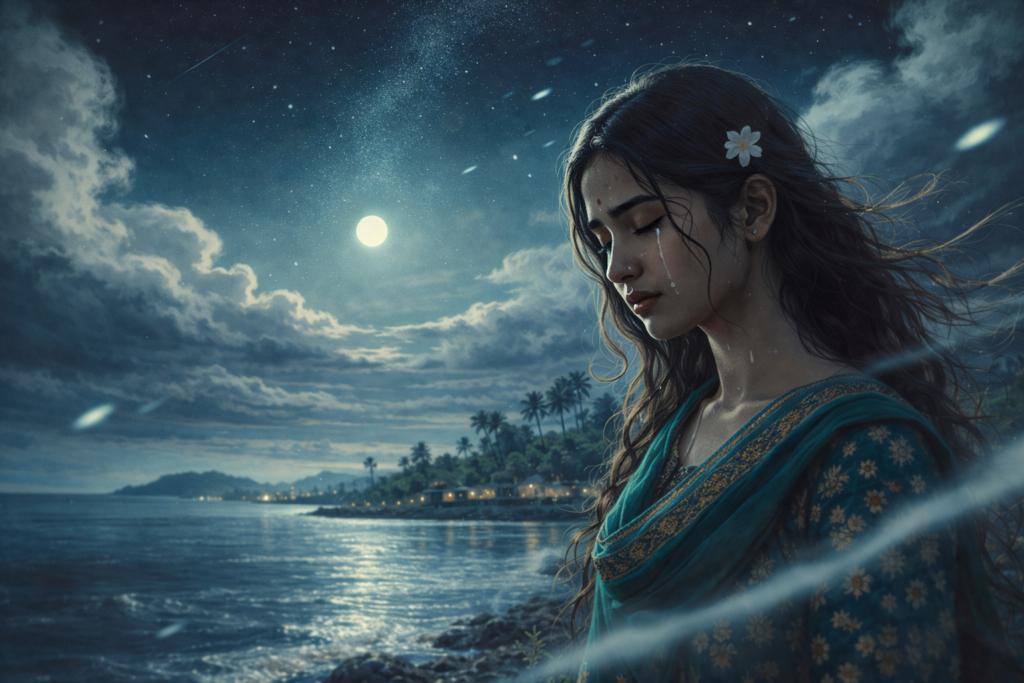
Tears fall softly now,
vanishing into the cold breath of night,
as if even grief is learning
How to disappear.
As the moon thins
and the final day of our love grows pale,
Have you already begun
Your journey into endless darkness?
Drifting through shadow,
Have you lost the path we once walked,
Or have you chosen to forget it
because remembering hurts too much?
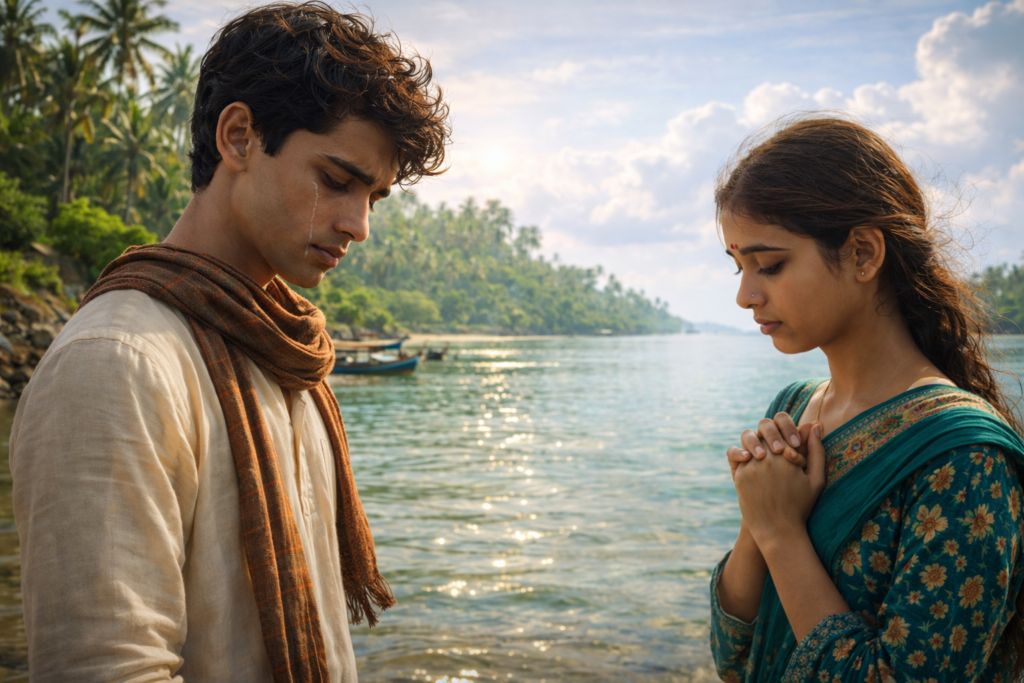
Your heart, once bright
as a bird in open flight,
now holds a quiet smile,
the kind worn by those
who have learned that holding on
can hurt more than letting go.
Even the sky mourns with us.
Dark clouds gather, heavy and close,
hiding the stars that once guided us,
covering the warmth
that once made the night bearable.
The moon, our laughter,
the love that once felt eternal,
all slip into shadow,
leaving behind a sorrow without horizon,
and a sky that weeps in silence
for the love
We were never meant to keep.
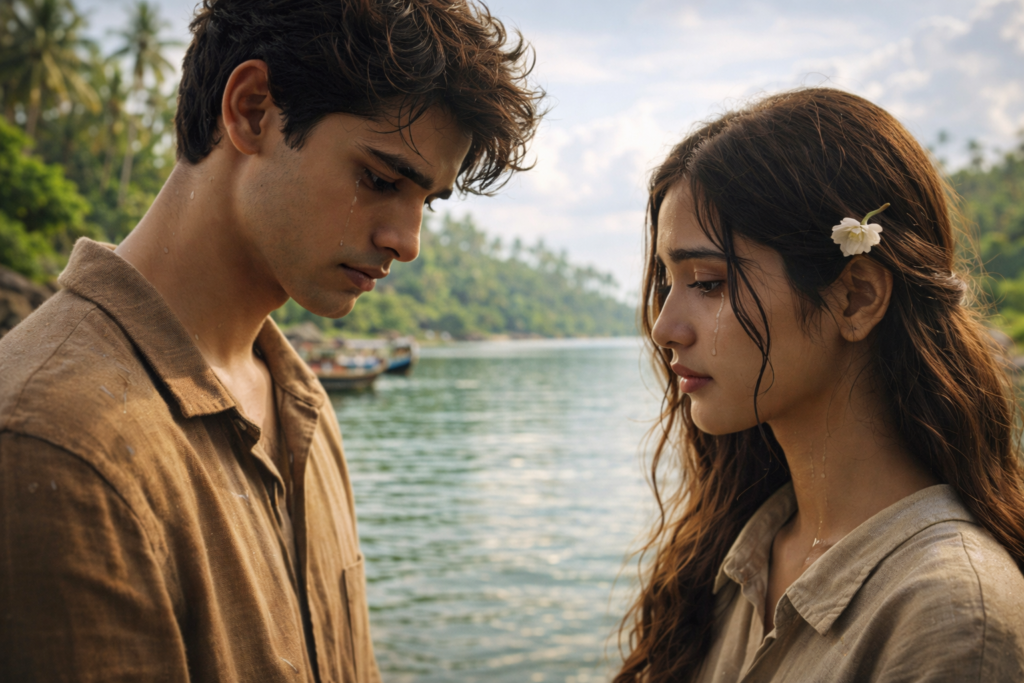
Reflection on The Lamp That Still Waits for Wind
This poem is a meditation on farewell, not the spoken goodbye, but the long, aching process of learning to live after love has already left. It captures the moment where the heart lingers behind, even when the path forward has begun. The speaker is not asking how to leave; they are asking how to understand leaving.
The central image of the lamp waiting for the wind is deeply telling. A lamp usually fears the wind, yet here it waits for it. This reveals a heart suspended between two pains: the pain of holding on and the pain of being extinguished. The trembling lamp becomes the self, fragile, exposed, still burning, unsure whether survival or surrender will hurt less. It reflects the human condition at the edge of loss, where even destruction can feel like relief.
Throughout the poem, nature is not merely a backdrop but a mirror of inner life. Love scatters like leaves before they are ready, suggesting that separation is not always timed by emotional readiness. Some endings arrive early, tearing people away before their roots have loosened. The leaves do not fall gracefully; they are ripped, spun, disoriented, just like lovers who are forced to let go before they understand why.
The sea imagery deepens this sense of helplessness. Memory becomes a tide with hands, pulling the speaker under, refusing release. This is an important philosophical turn: memory is not passive recollection; it is an active force. It resists time. It keeps the past alive even when the present demands movement. In this state, time itself seems to stall. Progress is not linear anymore; it is circular, repetitive, drowning.
The poem does not seek hope in a traditional sense. When the speaker looks toward the horizon, it is not for rescue or reunion, but for meaning. This is significant. It suggests a mature sorrow, one that no longer expects happiness, only understanding. The questions asked are not meant to be answered; they exist to give shape to pain. Wondering whether storms ever grow tired is another way of asking whether suffering has a natural end, or whether it simply changes form and continues elsewhere.
The “blue cloud of the soul” is one of the poem’s most tender metaphors. It carries grief the way clouds carry rain, quietly, heavily, inevitably. The shift from fierce rain to dew reflects emotional exhaustion. Grief, once loud and overwhelming, becomes small, constant, and almost invisible. Yet this softness is not healing; it is resignation. Tears fall not because they must be seen, but because the body has not yet learned another language.
The poem’s insistence that silence does not heal is its most profound philosophical statement. We often believe time and quiet will cure pain. This poem challenges that belief. Silence, instead, amplifies longing. It creates echoes. It allows absence to speak louder. Forgetting, the poem suggests, is not peace; it is another form of death. And so the heart keeps reaching, not out of hope, but out of refusal to erase what once mattered.
As the moon thins and darkness expands, the poem approaches acceptance, but not comfort. The question of whether the beloved has chosen to forget introduces a painful truth: sometimes people survive loss by letting go faster than others. And that difference in survival strategies can feel like betrayal to the one who remembers.
The final images, clouds hiding stars, warmth leaving the night, love slipping into shadow, do not dramatise the end. They quiet it. The sorrow left behind has no horizon because it has no promise of closure. It simply exists. And the final line acknowledges a difficult wisdom: some loves are real, deep, and transformative, yet were never meant to last.
In the end, this poem does not argue that love failed. It suggests something more haunting, that love succeeded in changing us, and that change is what makes goodbye unbearable. The lamp still waits, not because it believes the wind will come, but because waiting is the last way love knows how to stay alive.