
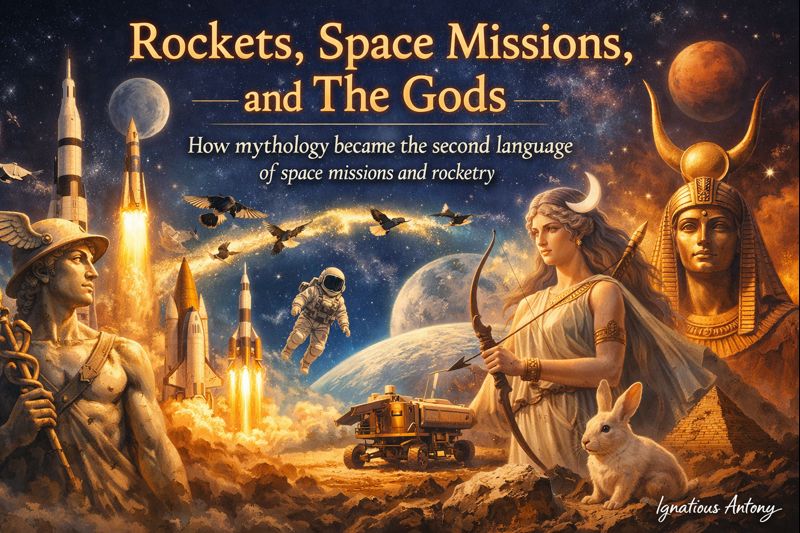
Rockets, Space Missions, and The Gods
How mythology became the second language of space missions and rocketry
Rockets, Space Missions, and The Gods
How mythology became the second language of space missions and rocketry
On some launch mornings, the world looks almost ordinary: blue sky, quiet ground crews, a rocket standing still like a tall tree.
And then you notice the name painted near the base, or printed on a mission patch, and something ancient suddenly appears in the middle of modern technology.
Mercury. Apollo. Artemis. Atlas. Titan. Ariane. Hera. Luna. Chang’e. Kaguya. Chandrayaan.
These words do not belong only to laboratories. They belong to old stories, gods, heroes, moon goddesses, sky guardians, and legends told by firelight long before anyone imagined a spacecraft.
Yet today, the most advanced machines humans have built still carry those names.
Why?
Because a space mission is not only engineering. It is also memory. It needs a name that people can speak easily, remember proudly, and pass on like a story.
Mythology gives space agencies a ready-made language of symbols: messengers for speed, hunters for navigation, goddesses for the Moon, protectors for planetary defence, fire gods for Mars, and even bridges made by birds for far-side communication.
Here is a warm, story-like tour across the world, showing how different nations use ancient names to give their newest dreams a human heartbeat.
The United States
From the messenger god to the moon goddess, and the rockets that carried them
America’s early space history reads almost like a planned myth sequence.
It begins with Mercury, the fast Roman messenger god. NASA chose this name for its first human spaceflight program because the mission’s job was exactly that: to carry a human message into space and bring it safely back to Earth.
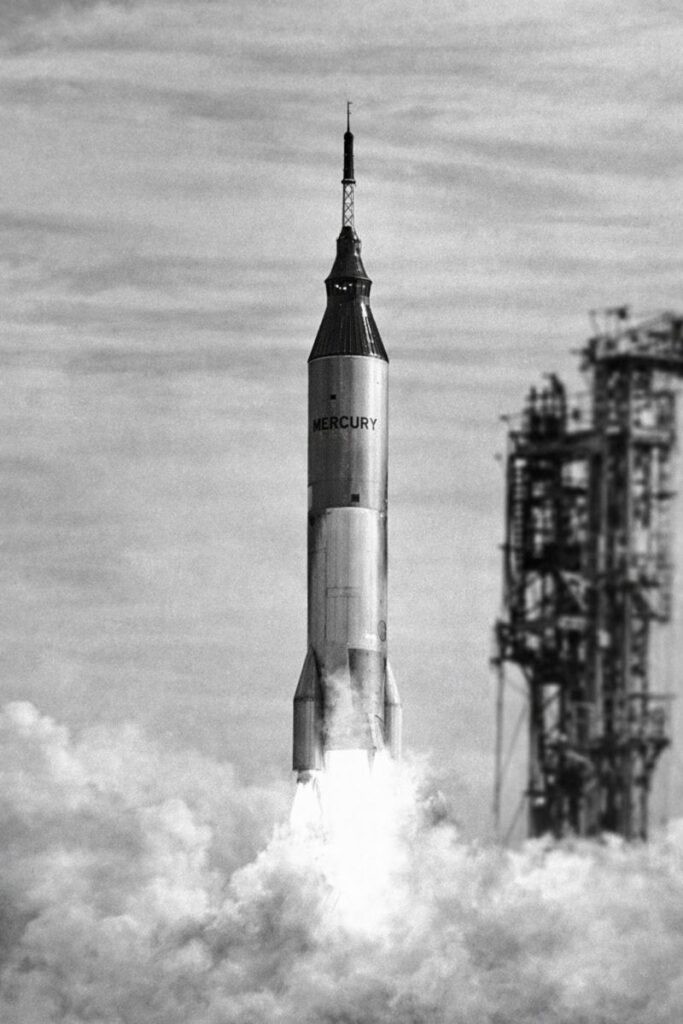
But here’s where the story becomes even richer. Mercury did not fly alone. It rode on rockets whose names also carried mythic shadows.
- Mercury-Redstone for the early suborbital flights.
- Mercury-Atlas for orbital flights.
And Atlas is not just a strong word. Atlas is a mythic Titan, famous for carrying the weight of the heavens. It is hard to imagine a more perfect image for a rocket expected to lift a human beyond Earth.
So, right at the beginning, American spaceflight is like a short poem:
Messenger (Mercury) rides on Titan (Atlas).
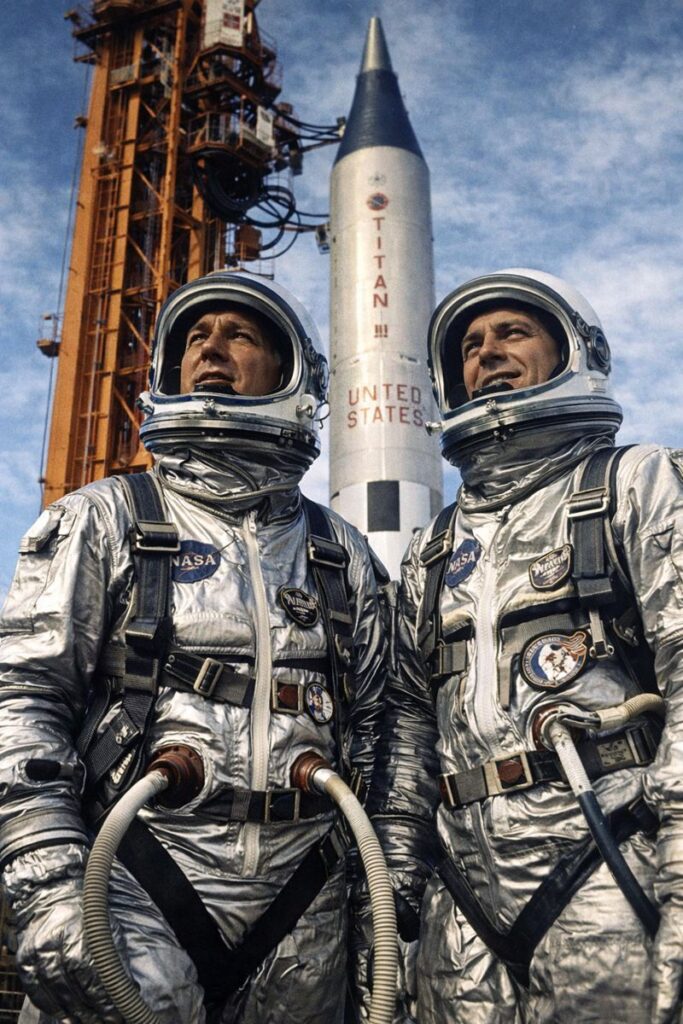
Then came Gemini, which means “twins.” This program was the training ground for the Moon, spacewalks, long-duration missions, and the delicate dance of docking two vehicles in orbit. Gemini was a bridge, and its name fit because the capsule carried two astronauts.
And once again, the rocket joined the myth.
All crewed Gemini flights launched on Titan II.
Twins ride on Titan.
Then, in a leap that felt like destiny, America moved to Apollo.
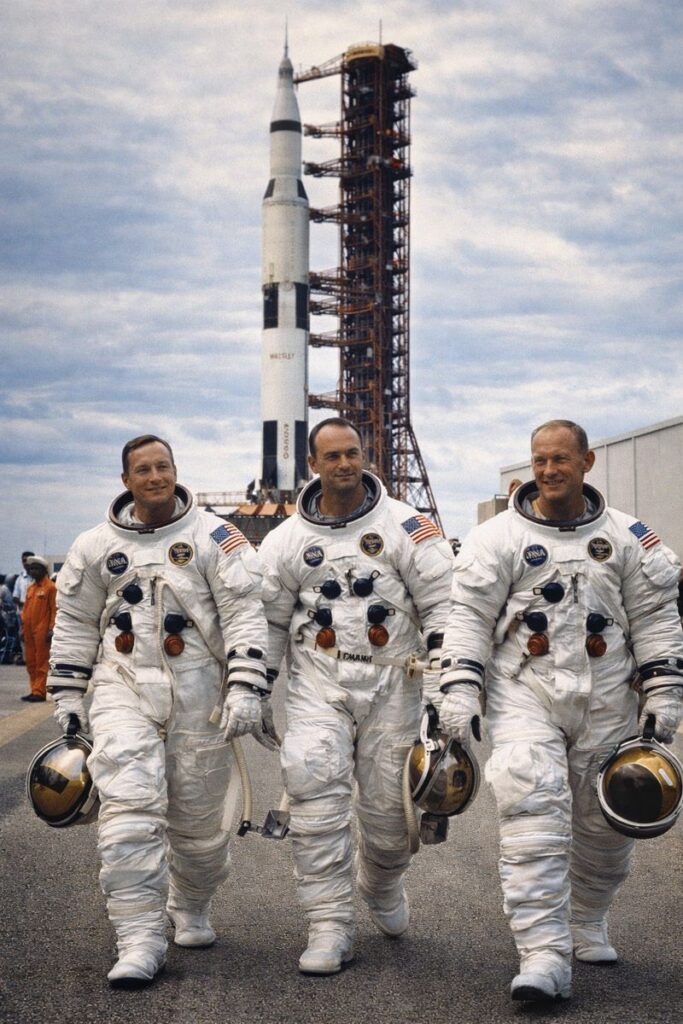
Apollo is a name that feels larger than a mission. It sounds like sunlight, music, and grandeur. NASA’s naming history even preserves the idea that Apollo’s chariot across the sky matched the scale of the Moon dream.
Apollo became more than a program name. It became a word people used the way they use the word “era.”
And again, the rocket carried mythology quietly upward.
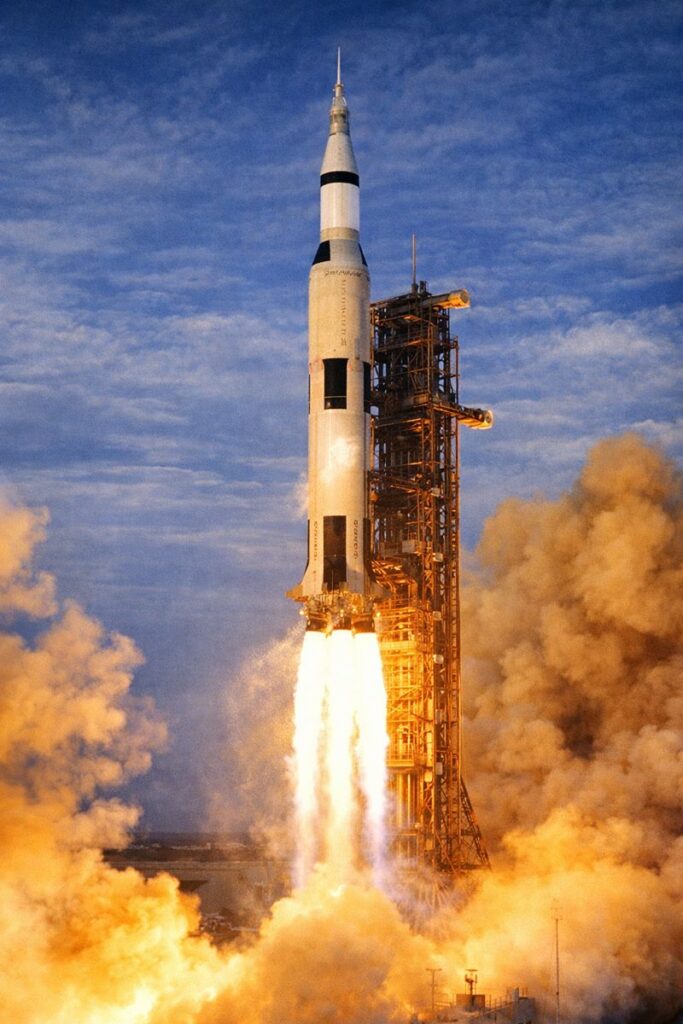
Apollo rode on Saturn rockets, especially the mighty Saturn V. Saturn is a planet named after a Roman god, part of the old classical sky-language that astronomy inherited long ago. Even the “V” in Saturn V adds a Roman touch; it is the Roman numeral for five.
So the launch vehicles themselves climbed like a mythic ladder:
Jupiter → Saturn → the Moon.
Today’s Moon program is called Artemis, and that choice is deeply intentional. Artemis is Apollo’s twin sister in Greek mythology and is strongly linked with the Moon. The name tells the public, in one word: we are going back, but this is a new chapter.
Artemis astronauts fly in Orion, named after the hunter constellation. Orion himself was a most handsome figure in Greek mythology, a great friend of Artemis, the Greek Goddess of hunting, before his accidental death. For thousands of years, humans have looked at the stars and seen shapes, stories, and characters.
Now, a spacecraft named after a constellation that is named after a Greek Mythological figure is literally travelling into that darkness.
In the U.S. story, mythology lives in both the missions and the machines:
Mercury, Gemini, Apollo, Artemis, Orion, and boosters like Atlas, Titan, Saturn.
And the myth names didn’t stop with astronauts.
NASA science missions also borrow gods to explain their purpose in a way ordinary people can feel:
- Juno goes to Jupiter. In Roman myth, Jupiter hides behind clouds, but Juno can see through them, just as the spacecraft studies what lies beneath Jupiter’s thick cloud tops.
- OSIRIS-REx is an acronym, but it also nods to Osiris, associated with rebirth, fitting for a mission that brought ancient asteroid material back to Earth.
- Psyche carries the “soul” into the asteroid belt.
- Europa Clipper heads to Europa, a myth name embedded in the Jupiter system, even when the mission title itself sounds nautical.
Europe
A thread out of the labyrinth, and a goddess on planetary defence duty
Europe’s mythology in space often feels elegant, less thunder and lightning, more symbols you can hold in your hand.
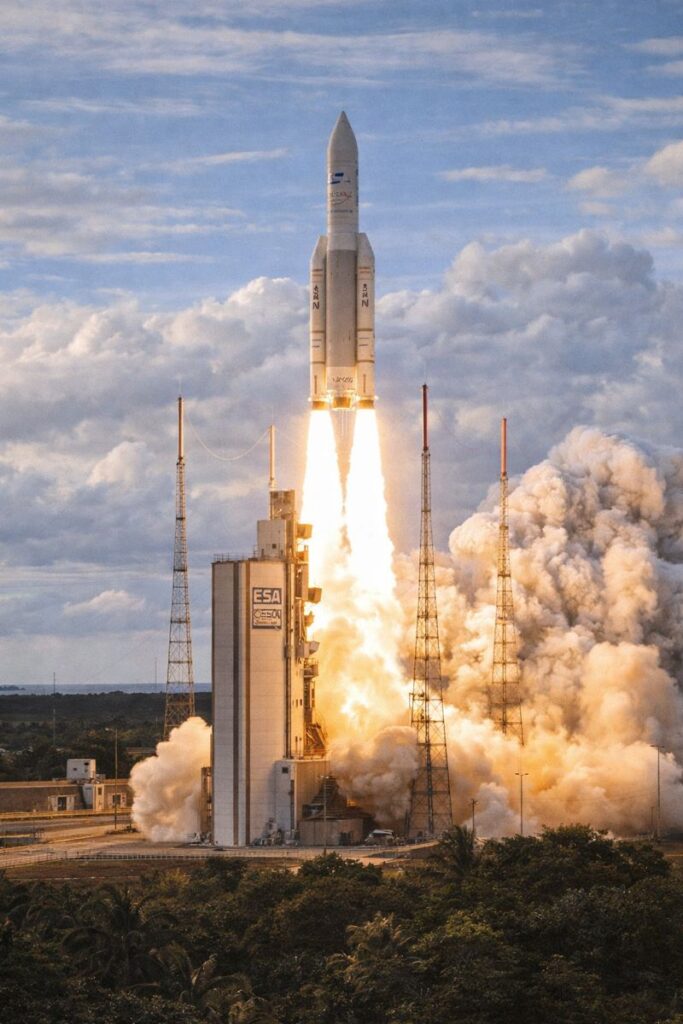
Europe’s famous launcher family is Ariane. It comes from Ariadne, the figure who gives Theseus a thread to escape the Minotaur’s labyrinth. ESA itself has told this story plainly: Ariane was chosen because the “thread” image felt right for a rocket meant to give Europe reliable access to space.
And what is rocketry, really, if not a labyrinth of physics and precision? Thousands of parts, tiny tolerances, unforgiving timing. A launch succeeds only if everything follows the thread perfectly, step by step, without breaking.
Europe also uses mythic names for science missions:
- Gaia, the ancient personification of Earth, became a mission that maps the Milky Way, helping humanity understand where we are in our own galaxy. It’s a gentle name for a bold idea.
And Europe’s mythology turns serious, almost protective, when the topic becomes planetary defence.
- Hera is an ESA mission named after the Greek goddess. In myth, Hera is powerful and watchful. In space, Hera becomes watchful in a new way, studying an asteroid system after an impact test, helping Earth learn how to move a dangerous rock if needed.
- Ramses, planned around asteroid Apophis, carries two layers: a practical acronym and the weight of ancient civilisation. It sounds old, steady, and strong, exactly the mood you want when watching a large asteroid pass close to Earth.
Europe shows a clear pattern: when the mission is about guidance, mapping, and protection, mythic names help the public feel the purpose before they even understand the details.
Russia / Soviet legacy: Mythology rides along through the sky’s inherited names, while rockets speak a different language
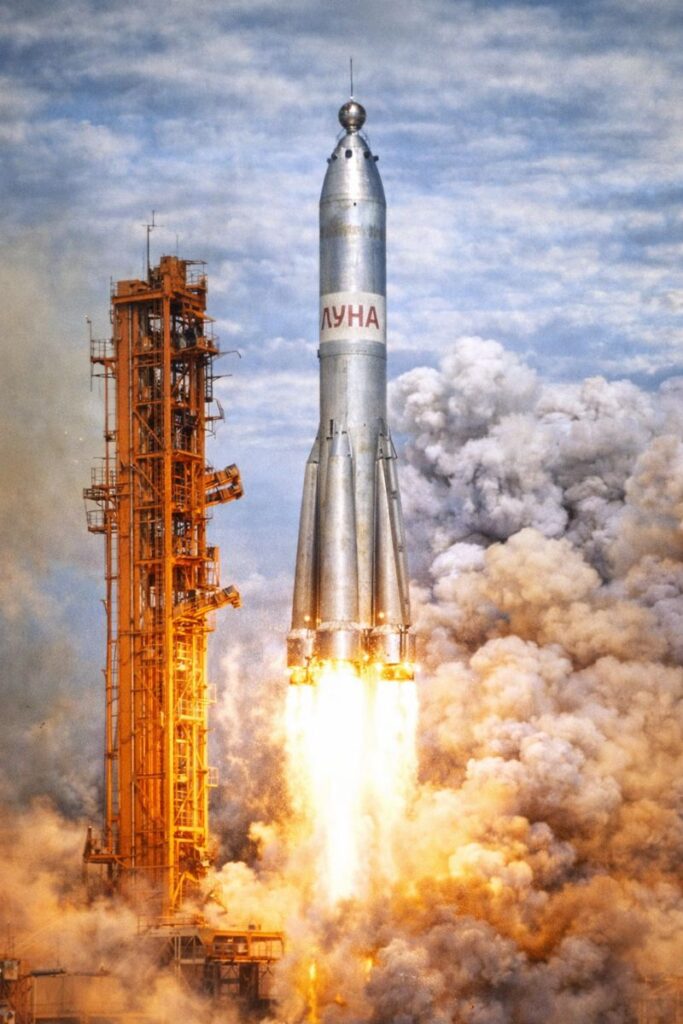
The Soviet space program often named missions in a direct, target-based way: Luna (Moon), Venera (Venus), Mars, Phobos. At first glance, these look like “plain labels.” But the twist is that astronomy itself grew up with mythology: Venus was named for a Roman goddess, Mars for a Roman god, and Phobos/Deimos come from Greek myth. So even a “functional” Soviet name can carry mythological history.
At the same time, Soviet rockets were usually named in a different style: not by gods, but by simple Russian words (like “East,” “Union,” “Lightning”) or technical terms (like “Proton”). That contrast is fascinating: mythology in the sky, practicality on the launchpad.
Venera: Venus, but in Russian, a goddess’s planet, explored by machines
The Soviet Venera program (1961–1984) was a major series of probes to Venus. Britannica describes Venera as a long-running program and notes early milestones such as Venera 3, the first spacecraft to strike another planet (Venus) in 1966.
Naming logic:
- “Venera” is simply Russian for Venus. Venus, in classical tradition, is the Roman goddess named, so the myth was already built into the planet’s identity.
Luna: the Moon, named as the Moon has long been named, and it changed what humans could “see”
The Soviet Luna programme (1959–1976) achieved historic firsts. Luna 2 was the first spacecraft to hit the Moon, and Luna 3 returned the first photos of the Moon’s far side.
NASA also preserves the significance of Luna 3’s first far-side image as a landmark moment.
Naming logic:
- “Luna” is the ancient word associated with the Moon in European tradition, and it also echoes the old mythic naming of the Moon.
Phobos: “Fear” , when a moon’s myth becomes a mission title
The Soviet Phobos program targeted Mars’s moon Phobos. ESA’s Mars Express science page notes that Phobos literally means “fear” (and Deimos “terror”) in Greek myth.
The Soviet missions show how strongly the mythic layer can survive inside a very technical program: you can’t even say “Phobos” without speaking the language of ancient stories.
Now, the rockets: less mythology, more plain words, but still powerful symbolism
Here are key Soviet/Russian launch vehicles and what their names mean. These names aren’t usually “myth gods,” but they are story-rich in a different way.
Soyuz rocket: “Union” a political and human message in one word
Soyuz is the Russian word for “union.”
It’s a rocket name that speaks less about mythology and more about identity: a nation presenting itself as unified, organised, and capable.
Vostok rocket/spacecraft family: “East”, sunrise language, not gods
Vostok literally means “East.”
This is a perfect example of Soviet naming: not a god’s name, but a simple directional word that still feels epic.
Molniya rocket: “Lightning”, a natural name for high-energy trajectories
The Molniya rocket family takes its name from the Russian word “Molniya,” meaning “lightning.”
It was derived from the R-7 line and used for missions requiring higher-energy trajectories (including early deep-space work), making “Lightning” a fitting metaphor even without mythology.
Proton rocket: a physics word, and a satellite name that stuck
The heavy-lift Proton rocket began as the UR-500. It was renamed Proton after its initial launch in 1965, which carried the Proton satellite (“Proton-1”).
China
Mythology and poetry as an official design choice, and now, even some rockets wear mythic names
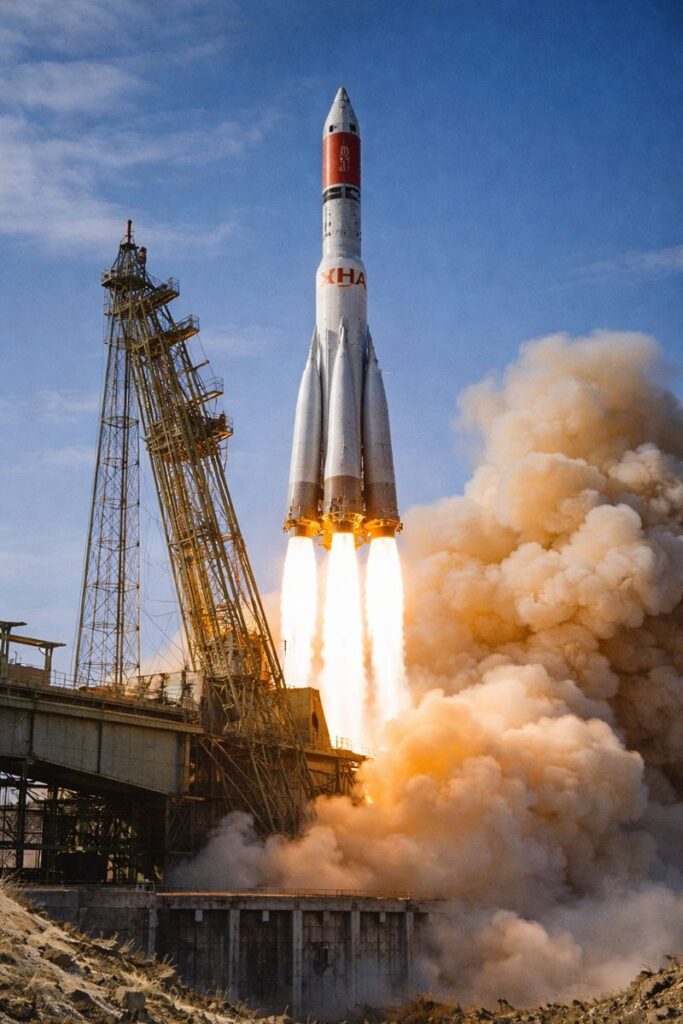
If any modern space power has made myth-based naming feel systematic and intentional, it is China. China often treats a mission name like a chapter title in a long cultural story: a goddess for the Moon, a classic poem for planetary exploration, a fire god for Mars, a magpie bridge for communications, and, in the growing commercial sector, even mythic beasts and “dragons” for rockets.
Chang’e: the Moon goddess becomes a whole program family
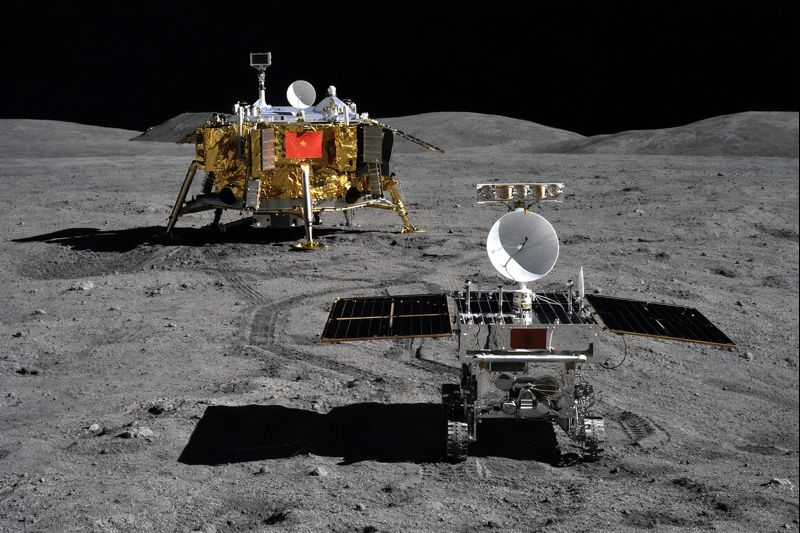
China’s lunar exploration program is Chang’e, and China’s own space authority has stated plainly that “Chang’e” is named after a legendary Chinese moon goddess.
This is not a one-off nickname; it is a family name for multiple lunar missions over many years.
What makes China’s naming style special: the story doesn’t stop with the goddess. China often adds story-linked sub-names so the mission feels like a living folktale.
Yutu / Yutu-2: the Jade Rabbit goes to work
China’s lunar rovers are called Yutu and Yutu-2, “Jade Rabbit.” CNSA explains the reference clearly: in Chinese folklore, Yutu is Chang’e’s white pet rabbit.
So, in one photograph caption, you can say: “The Moon goddess and her rabbit”, and readers immediately get an image.
Queqiao / Queqiao-2: the “Magpie Bridge” in the sky
To communicate with the Moon’s far side, China used a relay satellite named Queqiao, which literally means “Magpie Bridge.” The Chinese Academy of Sciences notes it was named after a Chinese legend.
The Planetary Society explains the myth: the “magpie bridge” comes from the story of the Cowherd and the Weaver Girl, who are reunited once a year when birds form a bridge in the sky.
A relay satellite is a very technical thing, but “Magpie Bridge” tells a human story instantly: a bridge that connects what cannot normally be connected.
Tianwen: “Questions to Heaven,” taken from an ancient poem
China’s planetary exploration program uses Tianwen, meaning “Questions to Heaven.” CNSA’s official announcement says the name comes from a poem by Qu Yuan and reflects perseverance in seeking truth and exploring the universe.
This is a powerful twist: instead of naming a mission after a conqueror, you name it after a question, a very “science-minded” choice.
Zhurong: fire and light for a Mars rover
Within the Tianwen-1 mission, the Mars rover was named Zhurong. CNSA states that Zhurong is the god of fire in ancient Chinese mythology, echoing the Chinese name for Mars, “planet of fire” (Huoxing).
So the name works on two levels:
- myth (fire god), and
- symbolism (Mars as “fire planet”).
Now, the rockets: two naming worlds in China
China’s rocket naming is especially interesting because it has two parallel traditions:
1) State launchers: proud history, not mythology
Most Chinese government rockets are Long March (Chang Zheng) rockets. These are not named after gods; they are named after the 1934–35 Long March military retreat, a major historical event.
So, in China, the missions may sound like myth and poetry (Chang’e, Tianwen), while the main state rockets often sound like history and national memory (Long March).
2) Commercial rockets: mythic beasts and “dragons” are arriving
China’s fast-growing commercial space companies have started using mythology and sky-symbols more directly—much closer to the style you see in NASA/ESA branding.
Zhuque-2: the “Vermilion Bird” rocket
The private rocket Zhuque-2 is named after Zhuque (Vermilion Bird), one of the famous Four Symbols in Chinese sky lore.
This is myth meeting modern engineering in a very visible way: a rocket named after a guardian creature of the heavens.
Tianlong-2 / Tianlong-3: “Sky Dragon”
Another commercial launcher is Tianlong-2, and Space.com notes the name means “Sky Dragon-2.”
In Chinese culture, the dragon is not just a monster; it’s a symbol of power, luck, and the sky itself, so “Sky Dragon” feels tailor-made for a rocket.
Ceres-1: a Roman goddess enters China’s commercial rocket list
One more surprising example: Galactic Energy’s Ceres-1. The company’s own site explains the choice: Ceres is the goddess of agriculture and harvest in Roman mythology, and they named the rocket after the asteroid Ceres.
This shows something new: China’s commercial sector is not limited to Chinese myth alone; it also borrows global classical names when they fit.
A simple “one-paragraph insight”
China’s naming feels like a carefully designed bridge between culture and science:
- Chang’e + Yutu + Queqiao turn the Moon program into a familiar legend with characters (goddess, rabbit, bridge).
- Tianwen turns planetary exploration into a poetic act, asking questions of the heavens.
- And while the state rockets mostly speak the language of history (the Long March), the commercial rocket boom is bringing myth back to the launchpad with names like Vermilion Bird and Sky Dragon.
Japan
Japan: Folklore, sky guardians, and poetic “dawn” missions, while the rockets keep a clean, technical naming style
Japan’s space names often feel personal and story-shaped, less like a monument, more like a tale you grew up hearing. JAXA/ISAS has used folklore characters, mythic sky guardians, and beautiful Japanese words to make difficult missions feel familiar. At the same time, Japan’s rocket names usually stay practical, letters, generations, and engineering heritage, creating a nice contrast.
Kaguya: a lunar princess goes home (and brings her elders with her)
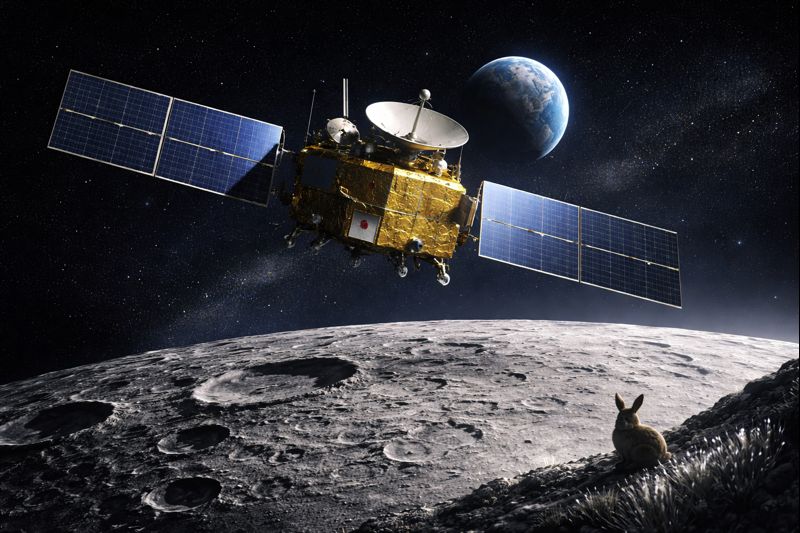
Japan’s SELENE lunar orbiter is famously nicknamed KAGUYA, after the old folktale “The Tale of the Bamboo Cutter” (Taketori Monogatari), in which Princess Kaguya is associated with a return to the Moon
What makes this naming uniquely “Japanese”: it wasn’t just the main spacecraft. SELENE had two “baby satellites,” and JAXA says they were given story-linked names too:
- OKINA , “honourable elderly man”
- OUNA , “honourable elderly woman”
JAXA explicitly notes these were chosen in relation to Princess Kaguya from the same folktale.
So the mission becomes a mini cast of characters: not just hardware, but a little folklore universe in orbit.
Rocket connection: Kaguya was launched on an H-IIA rocket.
Suzaku: a mythic red bird guarding the southern skies
Japan’s X-ray astronomy satellite Suzaku shows another style: mythic sky symbols. ISAS/JAXA explains that Suzaku is the red bird in Asian mythology, one of the four guardian animals linked with directions in the sky (Suzaku representing the south).
This is mythology used the way ancient people used the night sky: as a map with characters.
Akatsuki: “dawn,” chosen because Venus shines brightest then
Japan also uses poetic Japanese words as “myth-adjacent” symbolism, names that feel like small poems. “Akatsuki” means “dawn,” chosen because Venus shines beautifully as a “morning star” near dawn, matching the mission’s purpose to study Venus’s atmosphere.
This kind of naming doesn’t shout mythology, but it carries the same emotional job: it turns a technical mission into a picture in your mind.
Rockets: Japan’s launch vehicles speak a different language (heritage, letters, engineering)
H3: a name built from heritage, not a god
JAXA’s official naming announcement explains the meaning clearly:
- “H” stands for the successful heritage of H-IIA/H-IIB
- “3” implies an innovative new challenge (the next generation)
So while spacecraft may be Kaguya or Akatsuki, the launcher is often a clean, confident engineering label.
Epsilon and Epsilon S: a small rocket designed to make space “less special”
JAXA describes the Epsilon Launch Vehicle as a solid-fuel rocket intended to “lower the threshold” to space, making access feel less rare and more usable.
JAXA’s rocket page also explains why the upgraded version is named Epsilon S: the “S” is meant to signal Synergy with H3, plus Speed of response, Smart performance, and Superior competitiveness, among other “S” meanings.
This is a great contrast line for your article:
Japan tells stories with mission names and shows discipline with rocket names.
India
India: Sanskrit, sky-gods, and “yaan”, where mythology and language quietly power the brand (with rockets that speak engineering)
India’s space naming has a very recognisable rhythm. Many flagship exploration missions end with “yaan”, meaning vehicle/craft, and the first word often comes from Sanskrit, tied to the Sun, Moon, planets, and the deities behind them. The result is a naming style that feels both scientific and deeply cultural.
However, India’s Space program has not depended much on Indian/Hindu mythological figures.
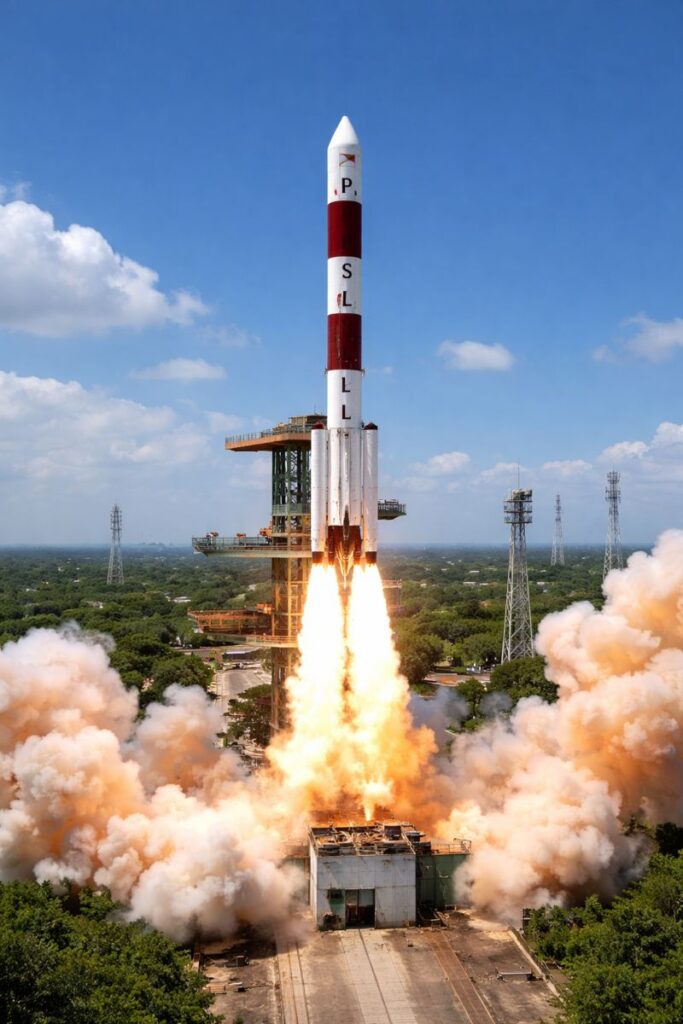
At the same time, India’s rockets mostly use engineering-style names and acronyms (PSLV, GSLV, LVM3), which creates a nice contrast for your article:
myth and poetry for the destination… precision and function for the machine.
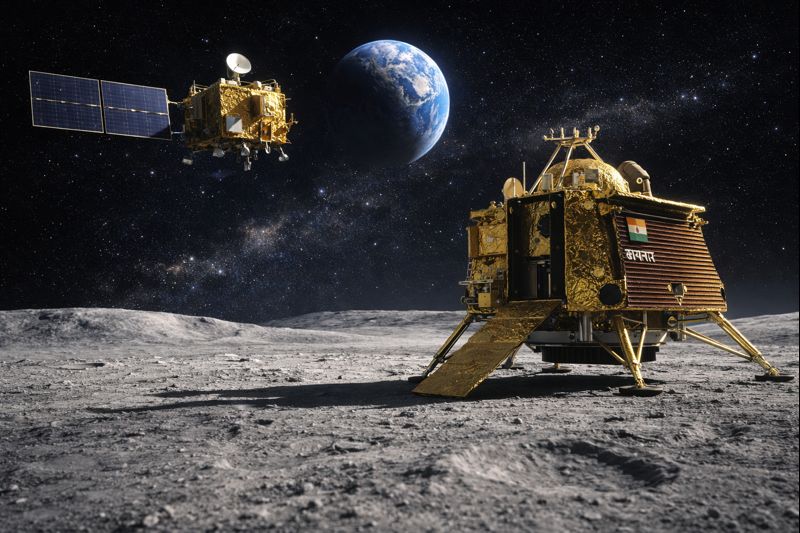
Chandrayaan: the Moon “vehicle” (Chandra + yān)
ISRO itself explains the name clearly: “Chandra = Moon, Yaan = vehicle”, a simple, Sanskrit-rooted name for India’s lunar spacecraft.
That’s where mythology quietly enters: Chandra is not only “Moon” as an object in the sky; it is also a deeply familiar figure in Indian cultural imagination. So even before the rocket lifts off, the mission name already carries an old, shared meaning.
Mangalyaan: the Mars “vehicle” (Mangala + yān)
India’s first Mars mission (Mars Orbiter Mission) became widely known as Mangalyaan, literally “Mars craft.”
Here, the myth-and-language connection is subtle but strong: Mangala is the Sanskrit name associated with Mars (and culturally, Mars is more than a planet, it’s a character in older traditions). The name makes the mission feel like part of a familiar cosmic map.
Aditya-L1: the Sun’s name, plus a precise scientific address
ISRO spells this one out beautifully: “Aditya in Sanskrit means the Sun.” ISRO also explains the “L1” part: it refers to Lagrange Point 1 in the Sun–Earth system, a stable location for continuous solar viewing.
Gaganyaan: a “celestial craft” for human spaceflight (a modern Sanskrit sky-word)
India’s human spaceflight program is Gaganyaan. ISRO’s official page describes the project goal plainly: demonstrating human spaceflight by launching a crew to orbit and bringing them back safely.
The name itself is widely explained from Sanskrit roots as gagana (“celestial/sky”) + yāna (“craft/vehicle”).
A lovely add-on character: ISRO’s humanoid robot for early flights is named Vyommitra, and India’s official PIB release explains the name directly: Vyoma = space, Mitra = friend.
That is almost storybook naming: a “space friend” travelling before the astronauts do.
Shukrayaan: Venus “vehicle” (declared/planned)
India’s planned Venus orbiter is popularly known as Shukrayaan, again using the same naming grammar: Shukra (Venus) + yāna (craft/vehicle).
Rockets in India: mostly engineering names (but they shape the story too)
India’s active operational launch vehicles are:
PSLV (Polar Satellite Launch Vehicle),
GSLV (Geosynchronous Satellite Launch Vehicle), and
LVM3 (formerly GSLV Mk III).
These names are not mythic; they are functional descriptions:
- PSLV: designed originally for polar/sun-synchronous missions (and later used for many kinds of orbits and even deep-space missions in practice).
- GSLV: for placing heavier satellites toward geosynchronous orbits.
- LVM3: India’s heavier-lift workhorse; ISRO describes it as a three-stage heavy-lift vehicle built for cost-effective higher payload capability.
Older rocket heritage (good “history box” material): ISRO notes that SLV-3 was India’s first experimental satellite launch vehicle.
This gives you a clean narrative arc: India moved from early experimental launchers to today’s reliable families, while mission names evolved into the Sanskrit “yaan” tradition.
Why mythology keeps winning the naming contest
A good mission name must do several jobs at once:
- Carry meaning in one word
- Travel across languages
- Become a story people can hold
- Give engineers and citizens a shared banner
That is why mythology keeps returning, not as superstition, but as symbol. Space is vast and silent. A mythic name gives it a voice.
And maybe that is the quiet secret: every rocket is made of metal and mathematics, but the moment it rises, it becomes something else in the human mind. It becomes a story, told in the oldest language we have.
A messenger on a Titan.
A thread through a labyrinth.
A magpie bridge in the dark.
A moon goddess calling her rabbit home.
A “space friend” is going ahead of us.
And somewhere, far above the clouds, those names keep travelling, carrying our modern curiosity inside ancient words.
Author’s Note
This article was written with a sense of quiet wonder rather than deep knowledge. While reading about rockets and missions from different countries, I noticed how often ancient names kept appearing beside modern machines. That simple pattern stayed with me. Engineers build with equations and precision, but humans remember through stories. A name drawn from mythology helps a mission feel familiar, speak across languages, and stay alive in people’s minds long after the launch is over.
I have tried to tell this story gently, without heavy theory or grand claims. These names are not about worship or belief; they are about connection. They help children ask questions, help ordinary people feel included, and help history travel alongside science. In the end, this is just a small reflection on how humanity carries its oldest words into its newest journeys, step by careful step, toward the sky.