
The Chair Before the Door
The Chair Before the Door
A Quiet Reflection on “The Chair Before the Door”
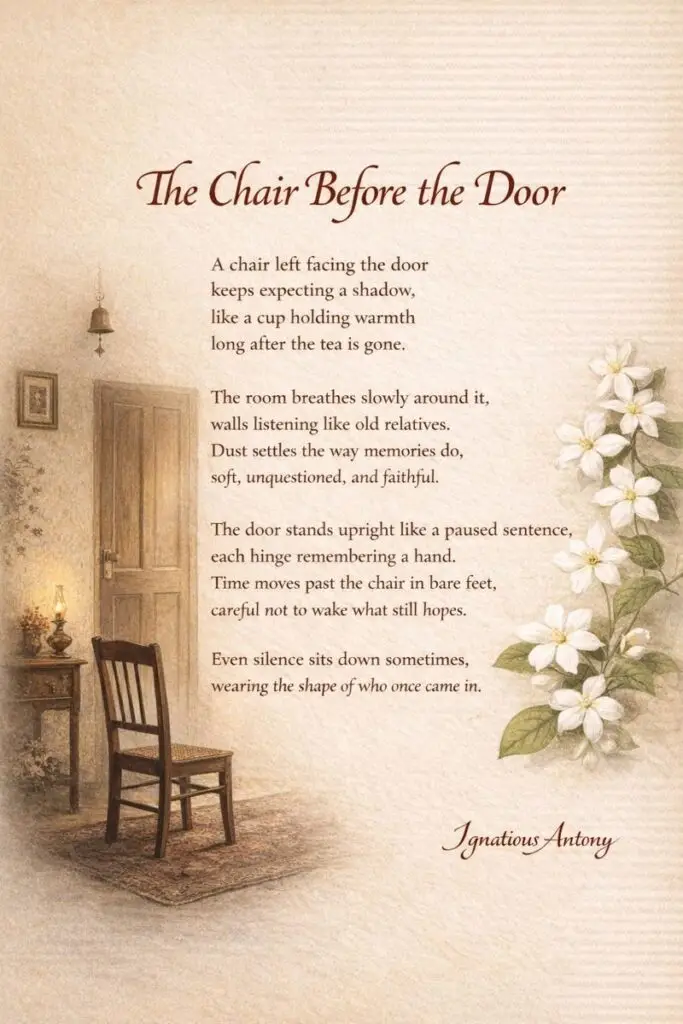
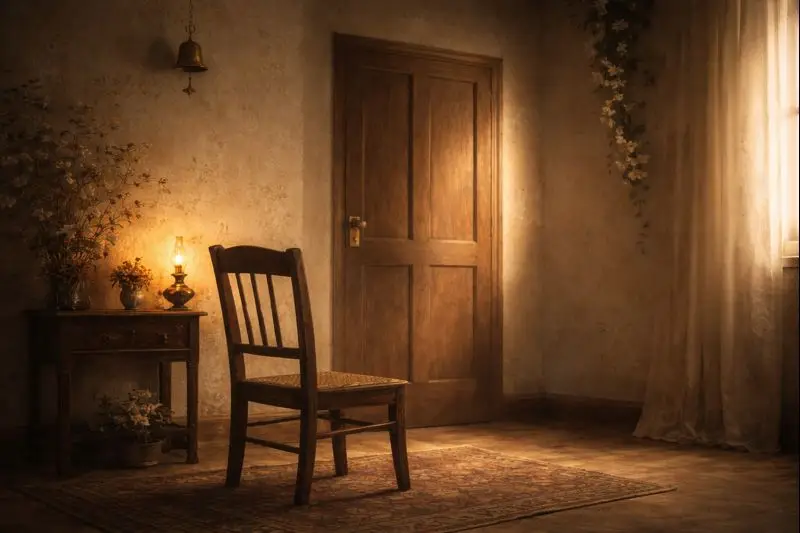
The poem speaks about absence after someone has gone, most likely through death or permanent separation. The chair facing the door becomes a symbol of waiting. It is not just furniture; it carries expectation. Like a cup that still feels warm after the tea is finished, the chair holds the memory of a presence that is no longer there.
The room is described as alive, breathing slowly, as if it too is grieving. The walls are compared to old relatives, quiet, observant, and full of unspoken understanding. Dust settling is not neglect; it is memory settling in. Memories arrive gently, without asking permission, and stay faithfully, even when time moves on.
The door is like a sentence paused midway. It suggests something unfinished, words that were never spoken, returns that never happened. The hinges “remembering a hand” show how everyday objects retain the touch of the person who once used them. Time passes softly, respectfully, as if afraid to disturb the hope that still lingers in the room.
In the final lines, silence itself assumes the form of the absent person. The room feels occupied, not by a body, but by memory. This shows how grief is not loud; it sits quietly, fills empty spaces, and keeps company with what remains.
Overall, the poem is about how love does not leave when a person leaves. It remains behind in objects, rooms, habits, and silence, waiting not for return but for understanding.