
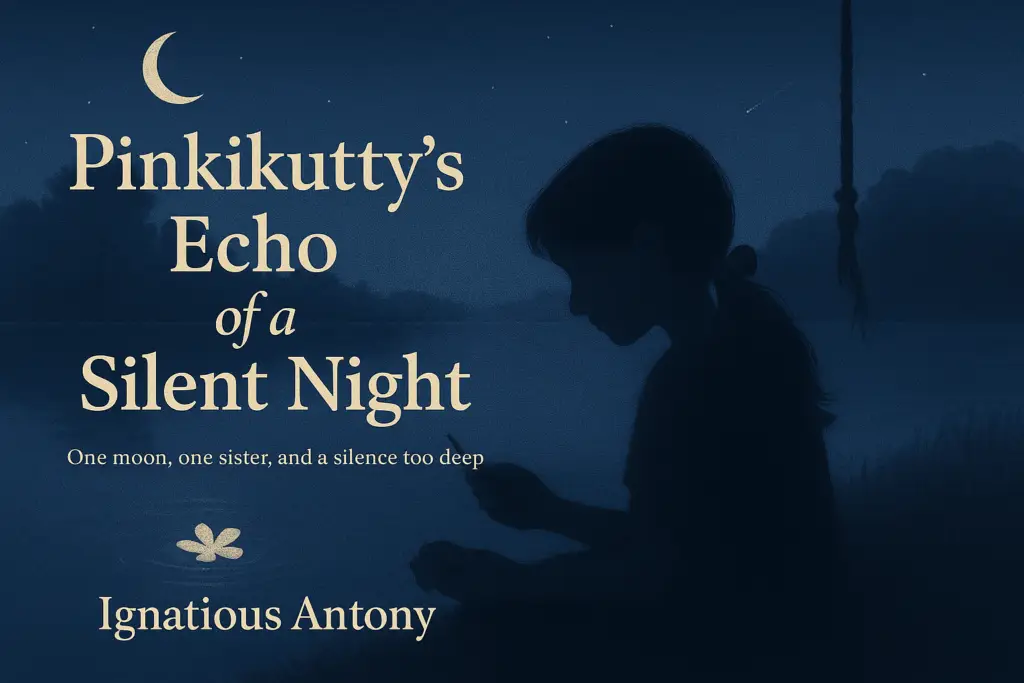
Pinkikutty’s Echo of a Silent Night
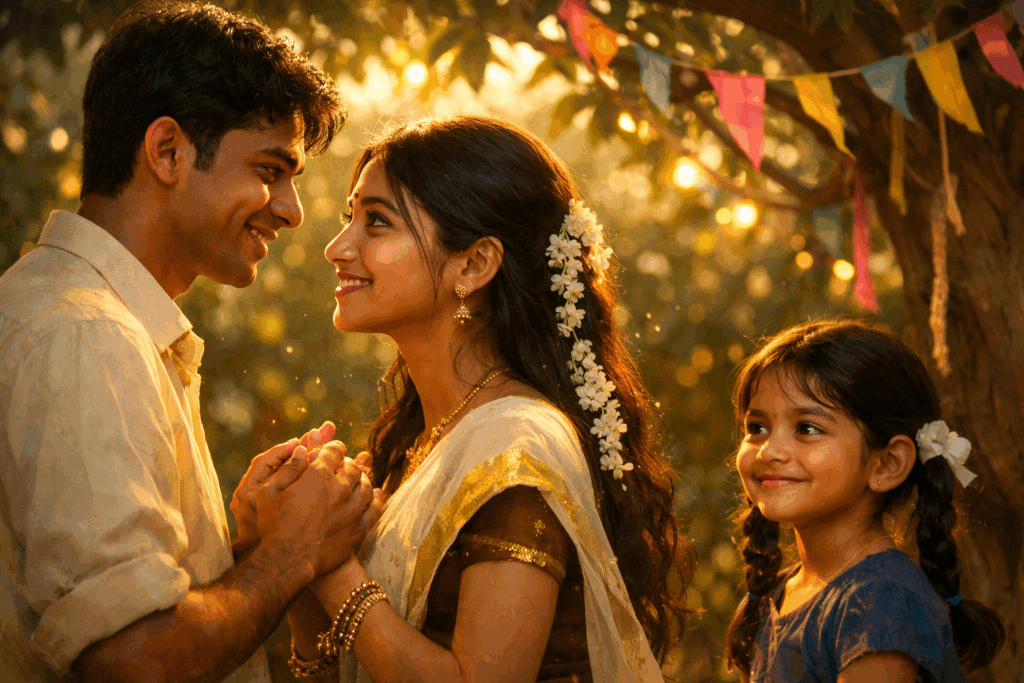
Pinkikutty’s Echo of a Silent Night
One moon, one sister, and a silence too deep
I called him Chetta, my sun after rain,
The one who lifted me on his shoulders,
So even sparrows looked small beneath my feet.
His pockets smelled of jamoon fruit,
His fingers tasted of roasted peanuts and sugar,
And his laughter was the swing that kept my world flying.
Each evening, he straightened my ribbons,
Blew dust from my cheeks like a patient breeze,
And crowned me queen of dragonflies.
We danced barefoot on monsoon tiles,
Thunder clapping like a proud uncle.
When I snapped my blue crayon,
he split his last one into two halves
And whispered, “Look, now we both can colour the sky.”
Then she came –
the girl with jasmine-breathed silence
And anklets that rang like temple bells,
Even on grass.
Chetta’s eyes turned into two trembling moons,
Whenever her anklets chimed at our gate.
He pressed shirts smoother than festival silks,
Borrowed sandal-scent from Appa’s shelf,
And tied leftover ribbons to the guava tree
So even the wind could sway in her colours.
To him, she was not just Jasmine,
She was festival light, river calm,
The secret song he followed like a prayer.
I thought she liked our mango stains.
and crooked badminton shuttle too –
Our little world of verandah sunsets.
But one morning, her footsteps left no sound behind.
No goodbye. No jasmine trace. No folded note.
Only a suitcase of silence and a ticket to America,
With the boy who smelled of money and foreign summers.
Chetta’s smile cracked softly,
Like Amma’s glass bangle slipping onto the temple stone,
A sound too gentle for the world to hear,
But sharp enough to bleed a heart.
After that, he grew silent,
The kind of silence that drifts like smoke
After the last wick sighs out.
He no longer hummed river tunes,
No longer tasted mango summer,
No longer let sunlight lean on his shoulder.
He simply stood beside the river.
As though its waters could carry sorrow
Better than a chest could carry it.
Children do not know,
How love can turn into wind and vanish.
We believe mornings return everyone,
Like school bells, like prayer echoes.
But one morning, arrived instead,
With voices cracking like storm-broken branches,
Telling me he had gone
“where sorrows end.”
I still do not understand
Why love sometimes leaves one blooming,
And the other breaking like dusk.
I keep the broken blue crayon,
Blunt and tiny as memory,
And the jamoon wrapper he curled
Into my palm like a secret treasure of sweetness.
People ask why jasmine never graces my hair.
I say nothing.
Because jasmine remembers more than I can carry,
And memory drips in me.
Like rain that will not finish falling.
He was my moon,
My festival dawn,
My peanut-fair laughter.
And I, his little star,
Too small to know
That even stars fall,
And some do not rise again.
Even now, by the quiet river he once trusted,
I hold the rope of our fallen swing, trying to feel his breath in the wind,
Still asking the sky,
Still asking the moon,
If love had stayed a little longer, would he still be here?
Showing the breeze how to whistle one more time, just for me.
Reflection on the Poem “Pinkikutty’s Echo of a Silent Night”
This poem reads like a memory that never learned how to end. It doesn’t announce its grief loudly; instead, it lets sorrow seep in slowly, like dampness settling into monsoon walls.
“Pinkikutty’s Echo of a Silent Night” is not only about loss, but it is also about how loss first enters a child’s world, quietly rearranging everything that once felt safe.
At its heart, the poem is a love story, but not the kind people usually expect. It is the fierce, unquestioning love between a younger sister and her Chetta.
Through Pinkikutty’s eyes, he is not just an elder brother; he is shelter, playmate, magician, and sky-maker. The images are tender and physical, jamoon-scented pockets, peanut-sticky fingers, ribbons being straightened, dust blown from cheeks.
These details matter because children understand love through touch, smell, sound, and small rituals. The poem understands this deeply. It does not say “he loved me.” It shows love as presence.
The blue crayon becomes the emotional centre of this bond. When it breaks, Chetta does not replace it; he divides his own.
This is childhood generosity in its purest form, but it also quietly foreshadows what is to come. He is someone who gives parts of himself away so others can keep colouring their sky.
That single gesture echoes painfully later, when love asks more of him than he can survive.
The arrival of Jasmine marks the first shift in Pinkikutty’s universe.
The poem does not resent her; instead, it renders her with reverence, anklets like temple bells, silence like jasmine breath.
Pinkikutty watches love form without fully understanding it. This is important. The child narrator is not jealous; she is observant.
She notices pressed shirts, borrowed sandalwood, ribbons tied to a guava tree so even the wind can participate in longing.
Love here is quiet, devotional, hopeful. It feels earned.
Then comes the poem’s most devastating turn, not with drama, but with absence. Jasmine does not leave behind conflict or explanation, only “a suitcase of silence.”
The choice of America is symbolic, not political. It represents distance, finality, and a world where love is weighed against money and futures that do not include everyone.
For a child, this kind of leaving is incomprehensible. There is no villain, no argument, just disappearance.
Chetta’s heartbreak is rendered through stillness. His pain does not scream; it withdraws. The poem captures depression with frightening accuracy: the loss of taste, music, sunlight, and language.
Standing by the river becomes his last form of communication, as if water might understand what words cannot hold.
This is where the poem quietly steps into tragedy, not as a sudden act, but as a long erosion.
The line “Children do not know, how love can turn into wind and vanish” is one of the poem’s emotional truths. Pinkikutty believes in return, in school bells, in mornings, in echoes.
When death arrives instead, it breaks not just her heart, but her understanding of how the world works. The phrase “where sorrows end” is painfully adult language given to a child, and the poem lets that discomfort sit without explanation.
What makes the grief linger is not the death itself, but what remains. The broken blue crayon. The jamoon wrapper.
The refusal to wear jasmine. These are not symbols chosen for beauty; they are objects burdened with memory. The speaker does not avoid jasmine because it hurts, she avoids it because it remembers.
This is a powerful idea: memory as something heavier than pain, something that continues to drip long after the rain should have stopped.
The final image, Pinkikutty holding the rope of the fallen swing by the river, is quietly unbearable. It shows grief as waiting, as questioning, as a hope that refuses to accept final answers.
She is still asking the sky and the moon, not because she expects a reply, but because love taught her to ask. The unanswered question, “If love had stayed a little longer, would he still be here?”, is the poem’s true echo. It does not seek closure. It seeks connection.
Ultimately, this poem is about how love shapes us even when it destroys us. Chetta gave Pinkikutty a way of seeing the world through generosity, tenderness, and shared colour.
His absence does not erase that gift. It makes it ache. And that ache becomes the poem itself: a small star speaking into the night, hoping the moon might hear, even if it never answers.